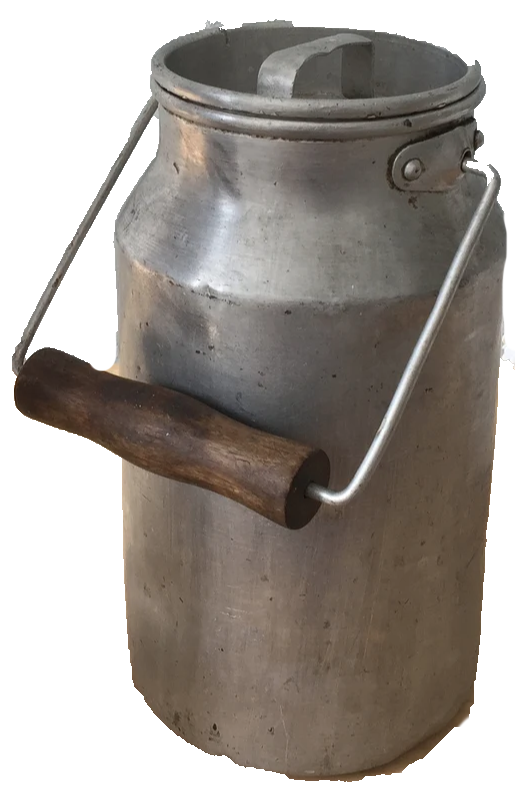
When I was little, my mother would hand me a banged up metal container,
and send my brother and me down the road to Frau Kiefer. Frau Kiefer would
fill the container, and we would proudly return home.
Can for buying milk 'from the tap'
in Frau Kiefer's diary storeBlack Forest summer vacations,
where the author learned to love cows.
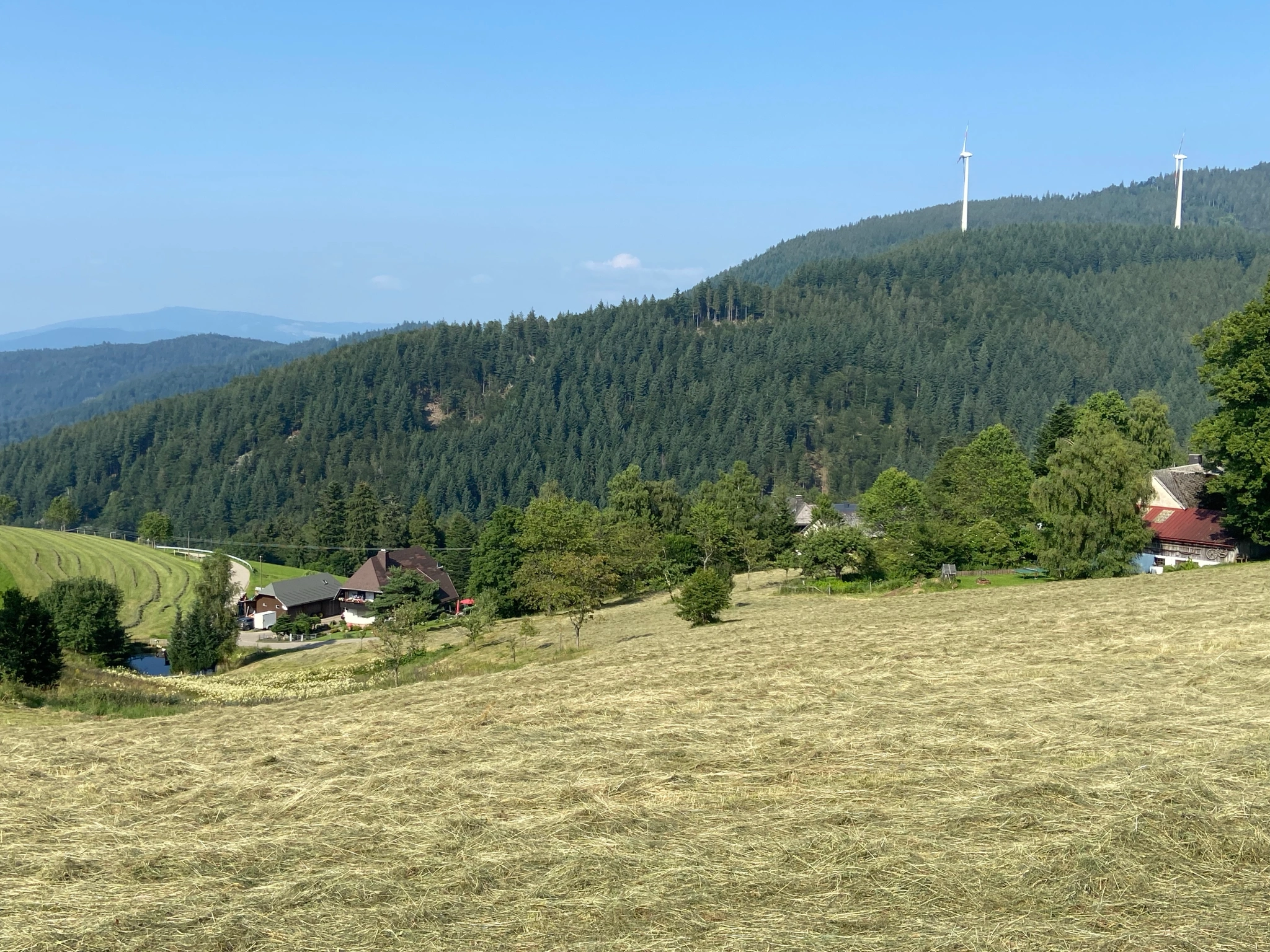
I spent many of my boyhood vacations in the Black Forest, at a time
when farmers still kept cows. We bought our milk every night from the
Asal farm family, whose three cows were Ella, Waldi, and Goldi. Though my
brother would start crying:
I don't want milk from a cow. I want milk from Frau Kiefer.
I would stick my finger into the Asal farm calf's mouth, if one had been born
that summer. The animal's suction power was amazing. And I was unaware of the
deceipt to which I was subjecting the poor baby.
Using a shovel, I got to push manure down a channel behind the cows, where it would
regularly accumulate, to my little boy's delight. I would push the shovel all the way
to a hole in the back wall, where it ended up outside on a heap. Liquids would be used
as fertilizer.
Those days are gone. No more cows in that part of the Black Forest. But my Stanford
office was covered with bovine images.
A few months ago, in Berkeley, I met a friend of my partner. He is a consultant to
dairy operations across multiple States. When he heard about my cow nostalgia, he
offered to broker a visit to one of his customers in South Dakota: the Orland Ridge
Dairy Farm. Definitely not open to the public.
Today was the day. I met the manager, Brant, who took almost two hours, and introduced me to the operation in detail. This then is a report of my wonderful visit.
First, note Brant's age. There is a younger generation taking these operations on.
It's a family farm. The smallest in the region, with 3000 Jersey cows. I've come a
long way from Ella, Waldi, and Goldi.
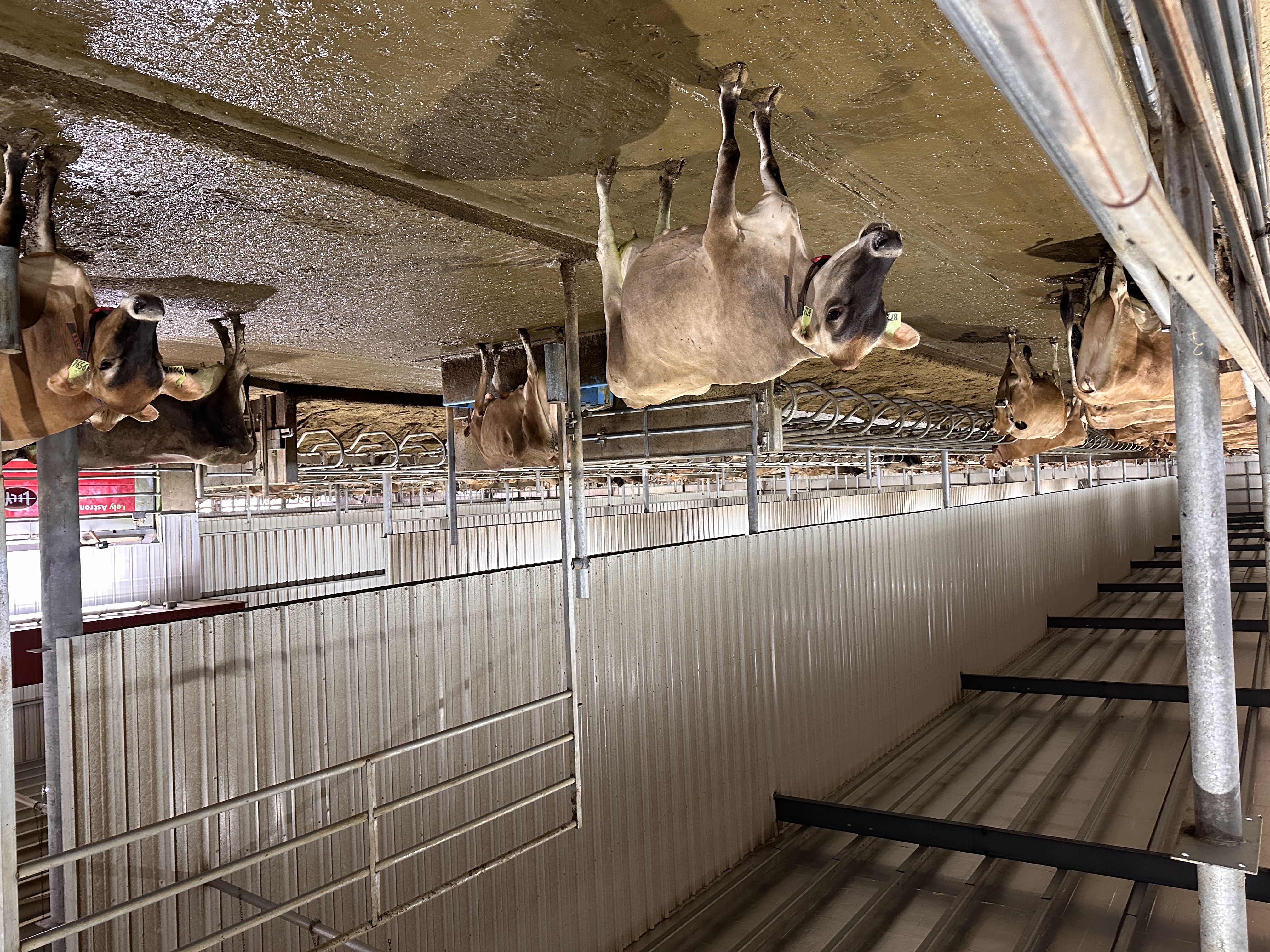
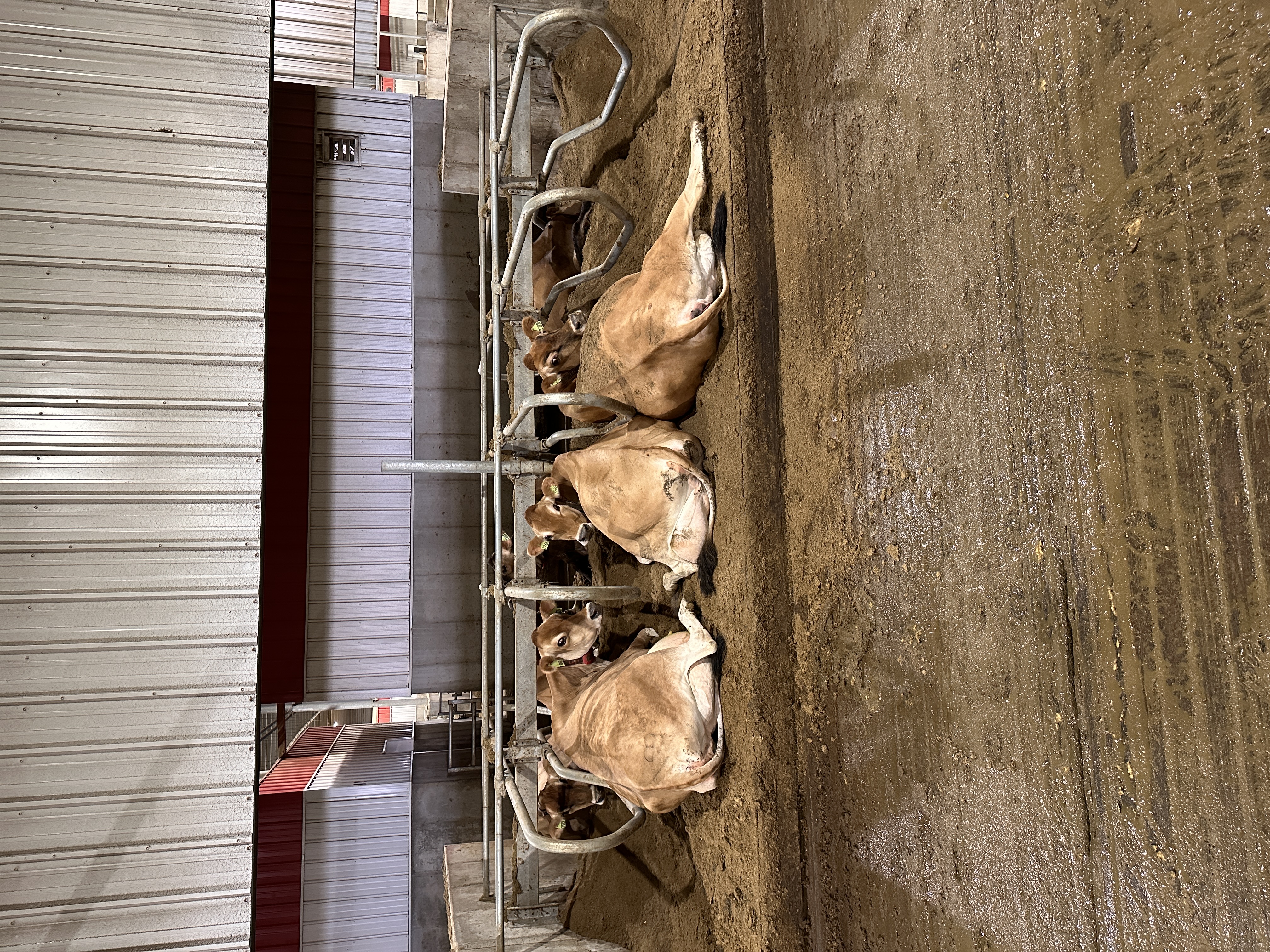
Because the animals produce continuously, they are well taken care of.
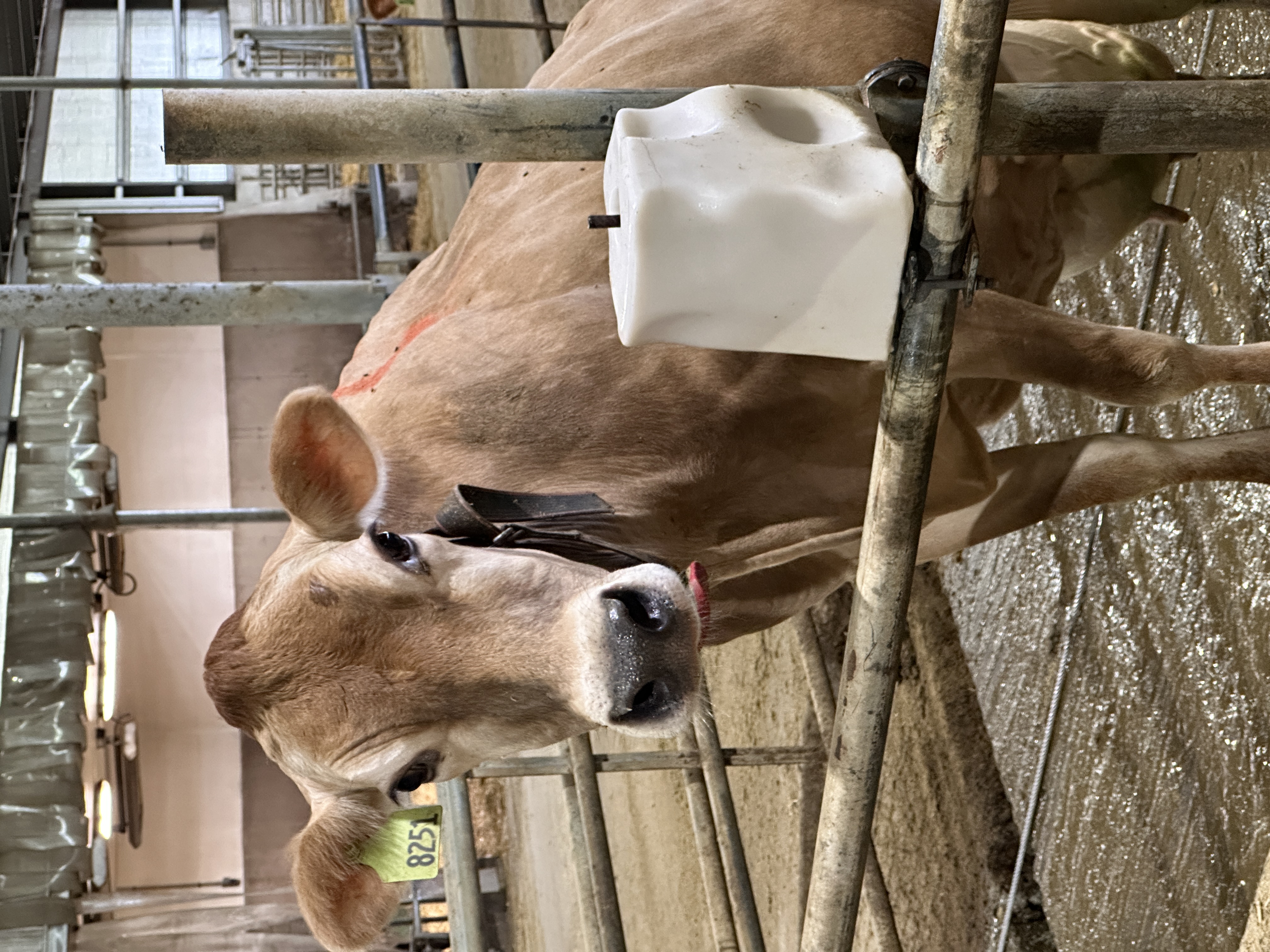
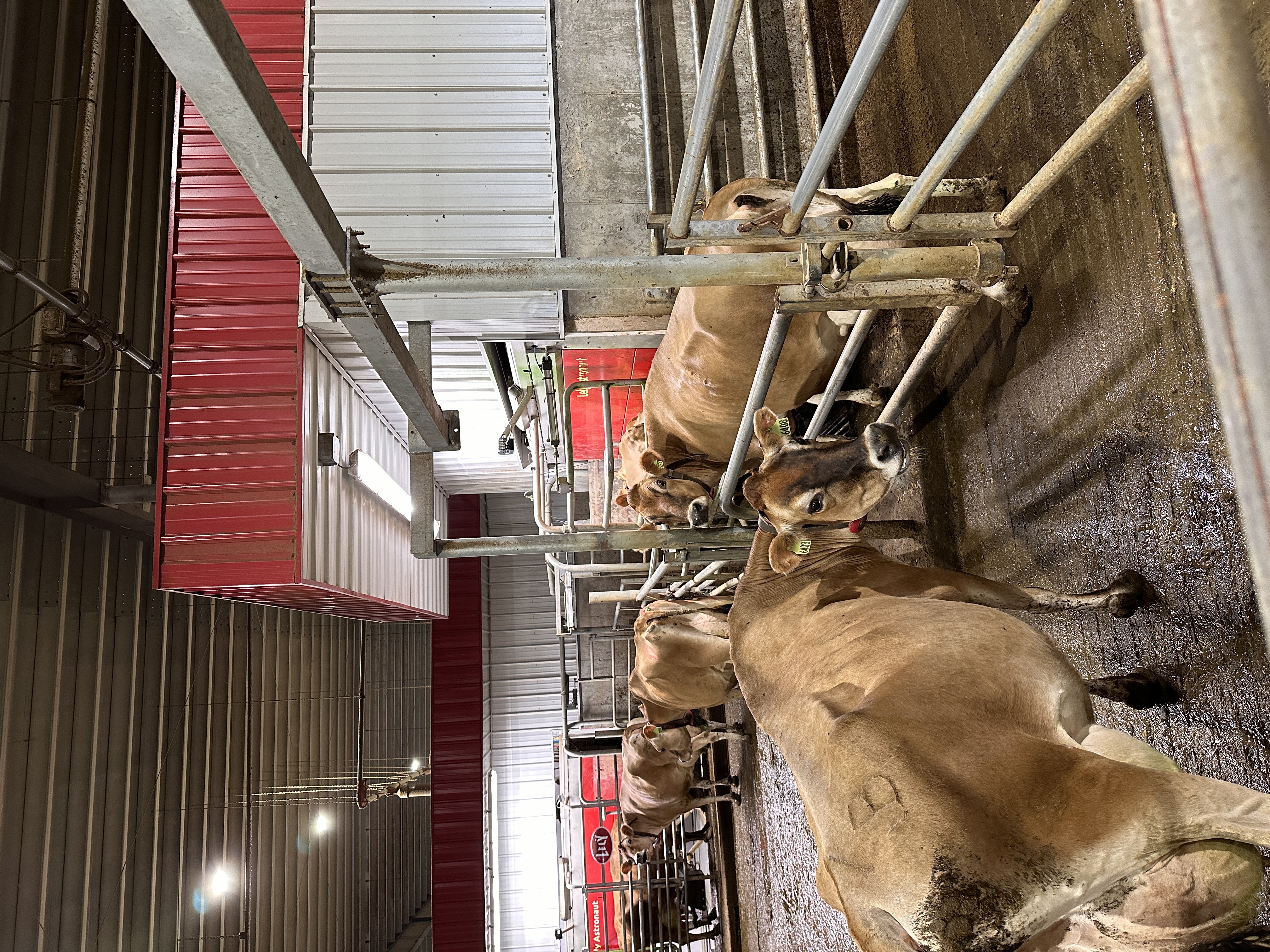
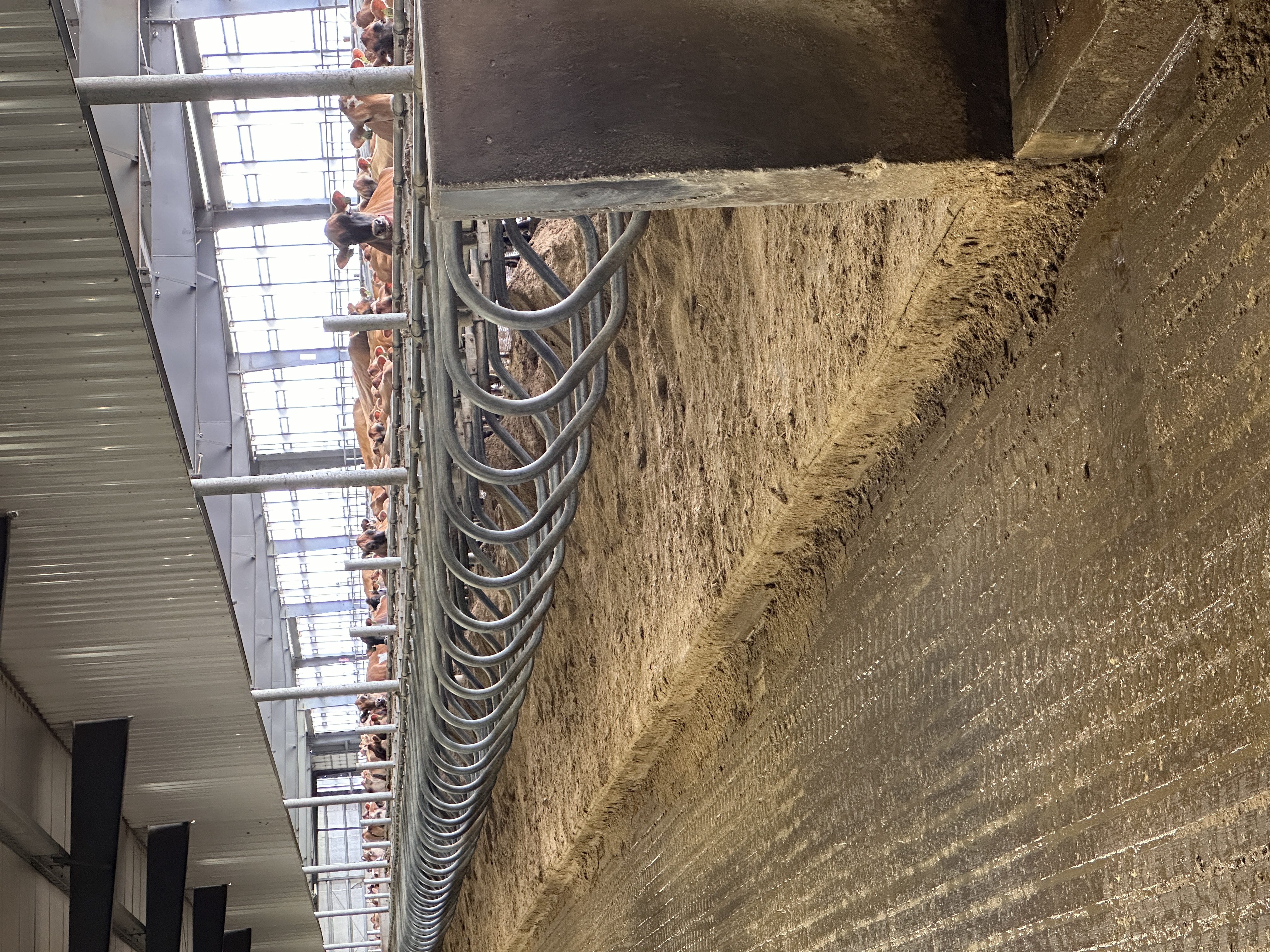
Yes, no grazing outside. But they roam around, and develop personal daily routines.
If one hangs out inside their enclosures, they follow around, curious, like dogs.
Cows move about freelyThe animals are curious
Getting the Milk
The dairy employs fifteen people, which implies that these cows are
not milked by Mrs. Asal on a stool, pulling Waldi's teats while keeping her
from knocking over the slowly filling bucket.
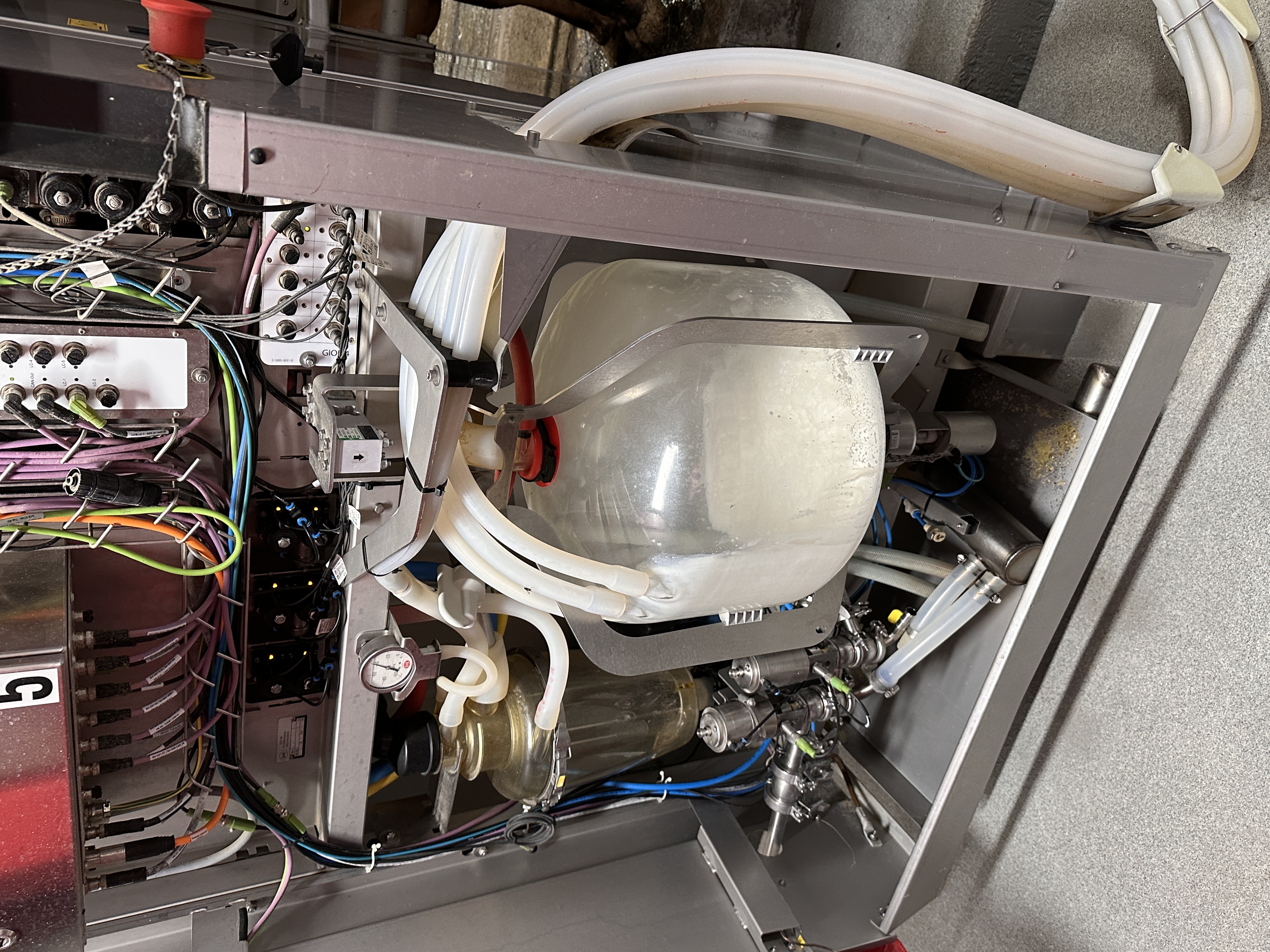
Robots do the milking, and they keep track of every cow's details. The animals
decide when they want to be milked. To initiate this process a cow enters a
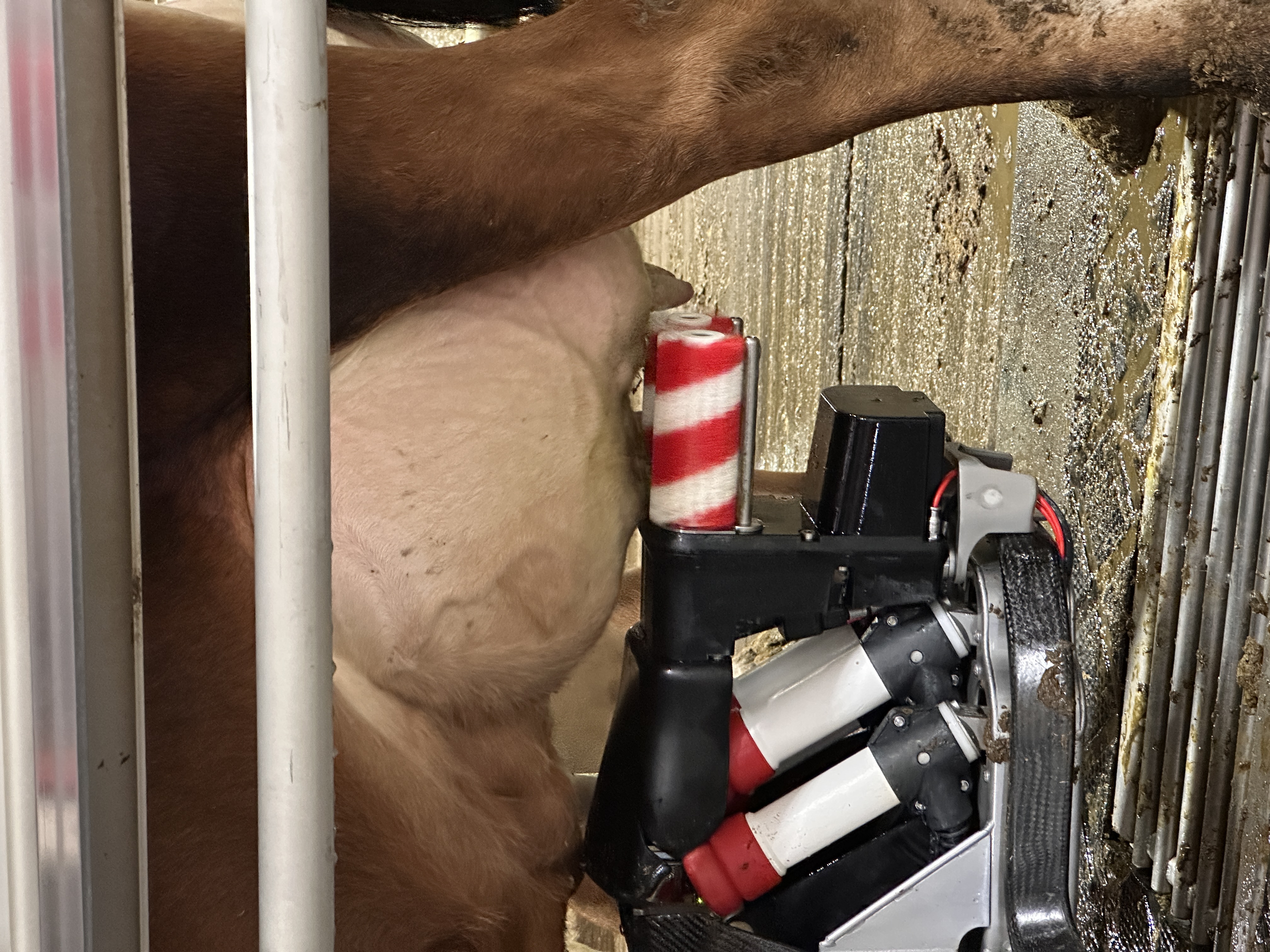
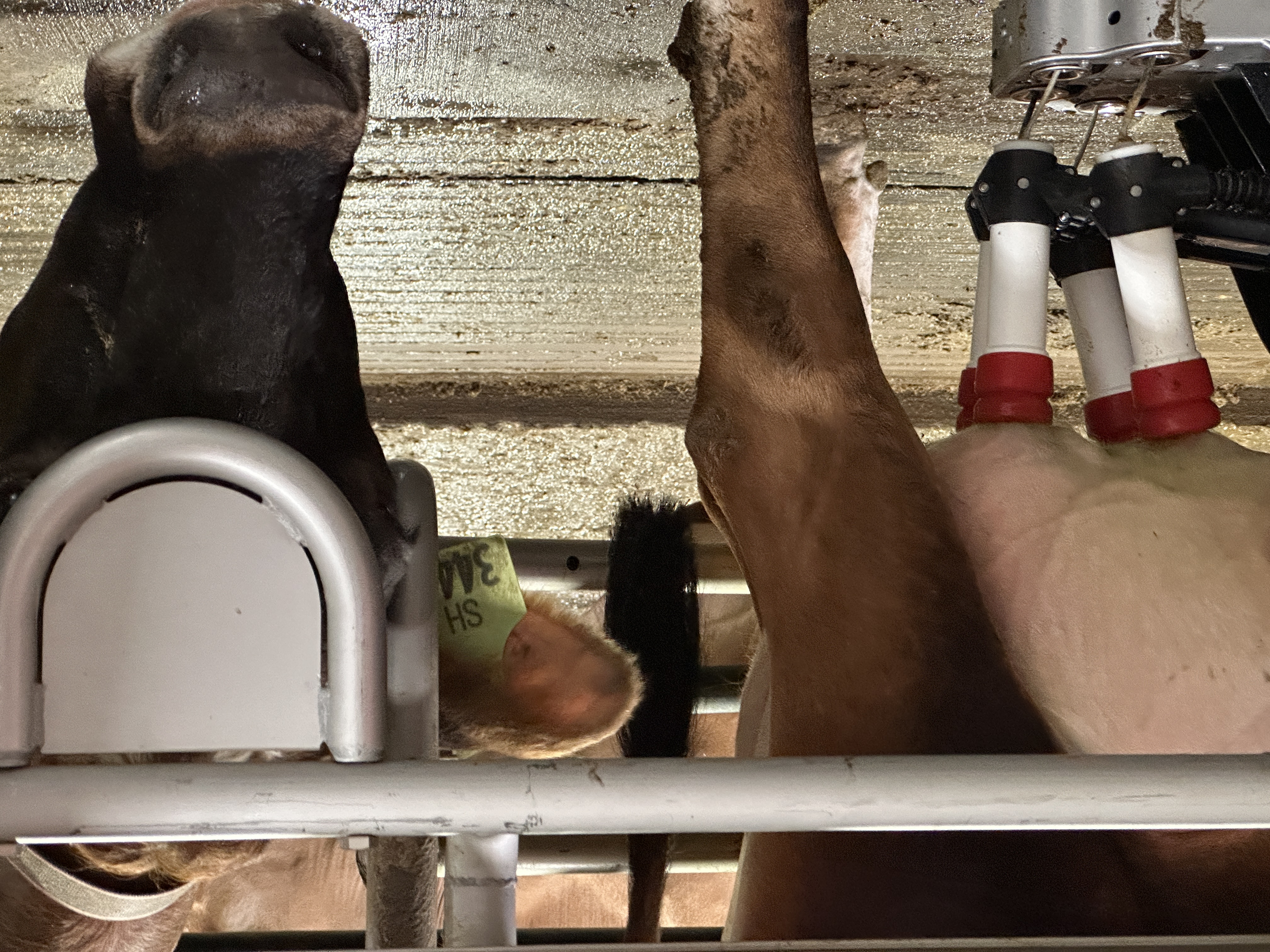
stall. A robot then cleans her udders, acquires each teat, and receives the milk.
Cows stand in line for milking. They know, a treat is involved
The animals are incentivized into the milking stall by special treats that
are figured into their carefully managed food mix, and are available at the
exit gate of the stall. The rear gate closes behind her to keep her peers out,
but the gate does not touch her back.
The cows love the treats, and on their initially joining the herd, they keep
returning to the stall. But the robot knows whether they are ready for milking
again, and kicks them out the front. Eventually, each cow gauges their milking
readiness.
However, some experienced bullies among the herd will linger near the front of
the line. When the gate opens, they run up, muscle the next in line out of the
way, and get in.
In contrast, the more timid cows have arranged their milking cycles to fall into
the middle of the night, when the bullies have retired.
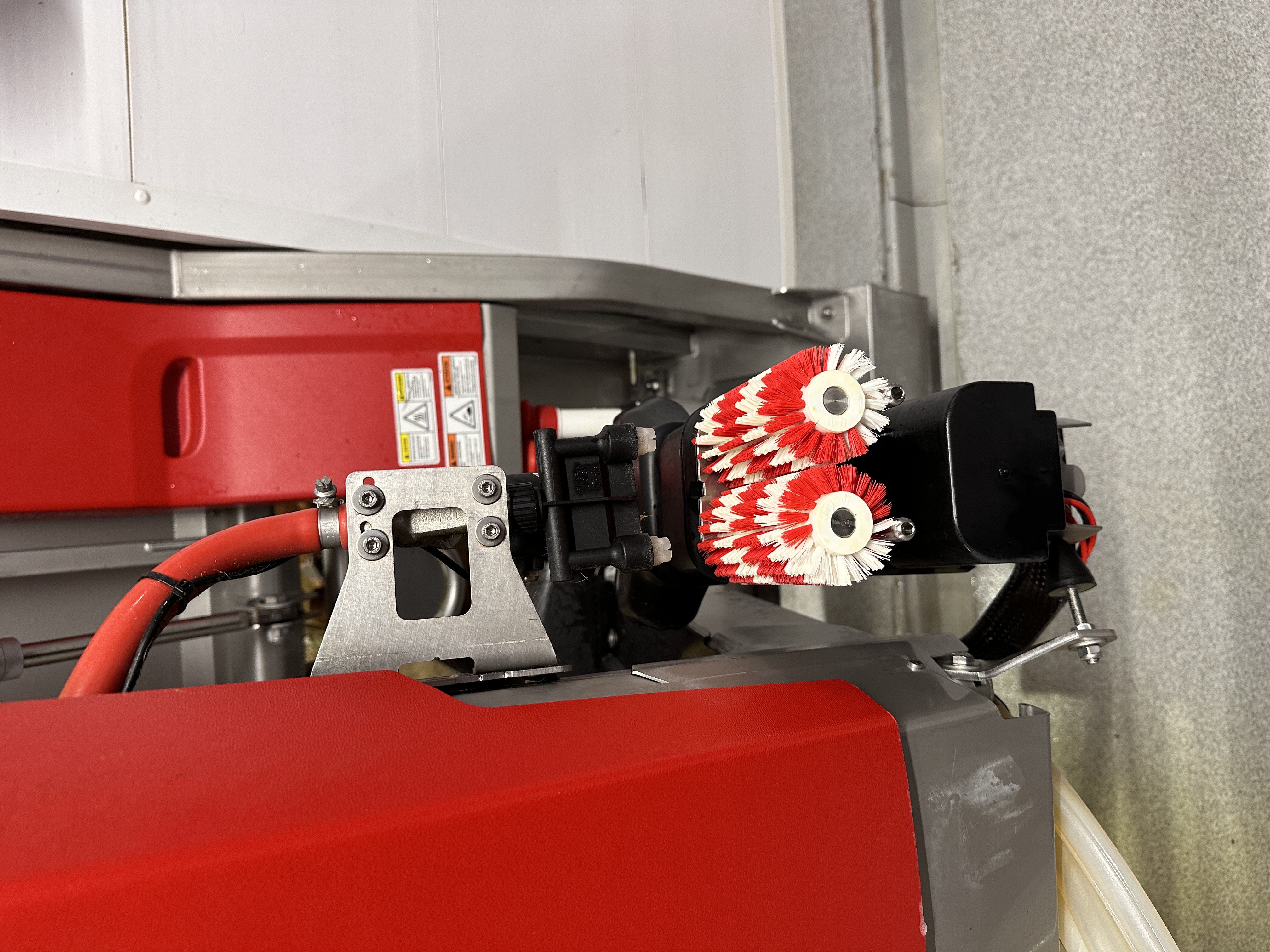
The robot registers each entering cow's identity from its collar. The machine's
task is to locate each of the teats, and to apply the brushes. As each udder is a
bit different, the robot retains a history of individual teat positions for 25 visits
of each cow. The robot's search therefore starts at close to the target for each
visitor, and the teats are acquired by close range infrared sensing.
Each teat is cleaned between these brushesBeyond cleaning, the brushesTeats are acquired. The next cow is waiting, and studying us
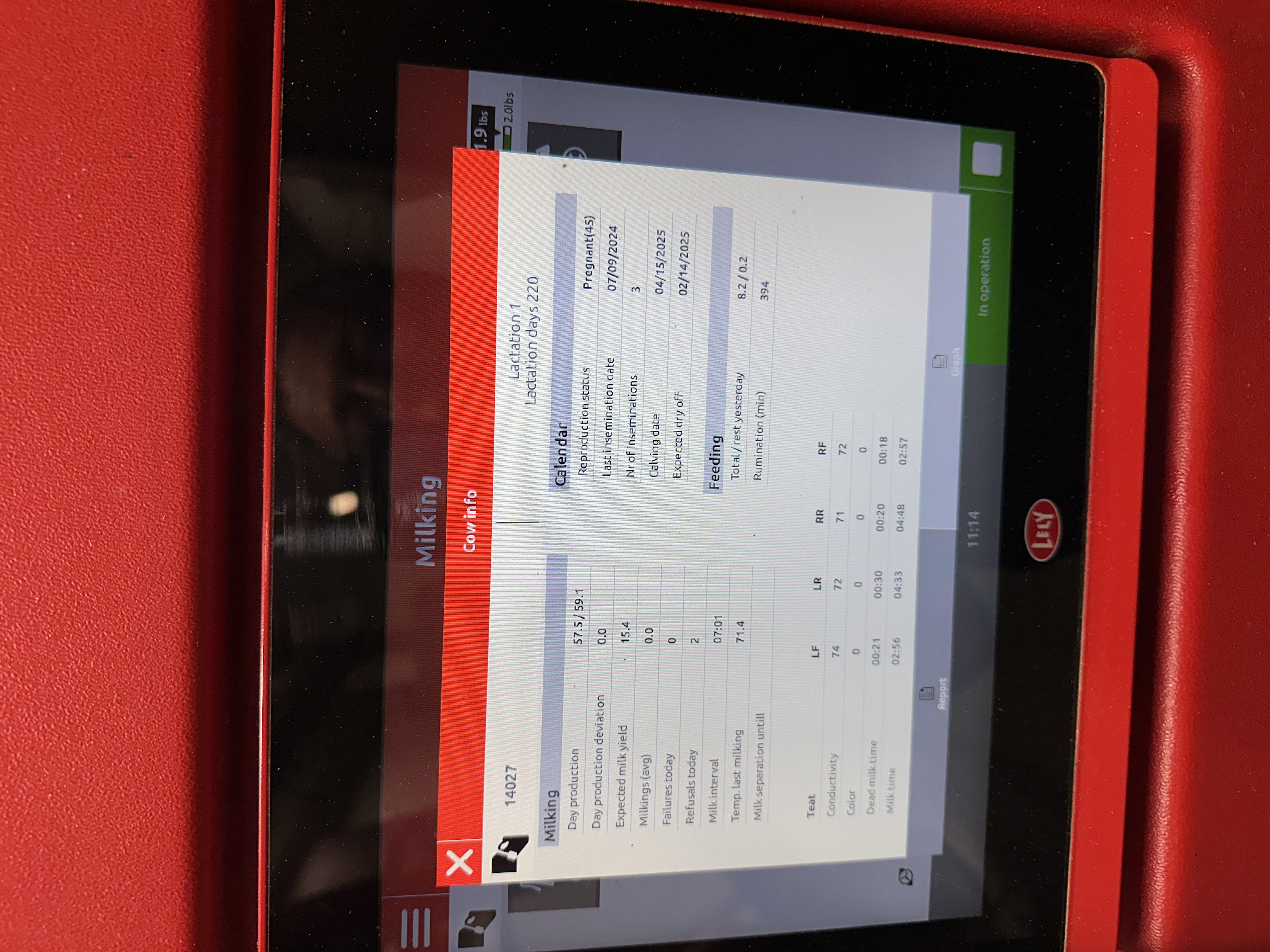
The machine records each cow's details, as seen in this screenshot. Since there
are four separate milk lines, any problems with an animal's ducts are detected,
and reported to humans. Click on this screenshot to see details about the cow
currently being milked. Each milk duct is observed separately: FL,RR,...for front-left,
rear-right, etc.
Every cow is individually monitored...
Similarly, the milk and manure are regularly tested. Every aspect of each cow
is monitored for health, and productivity. In some cases the computer activates
a gate change such that a cow with potential health issues is separated into a
different holding pen, and the human operators are notified.
And there you go...
Cooling
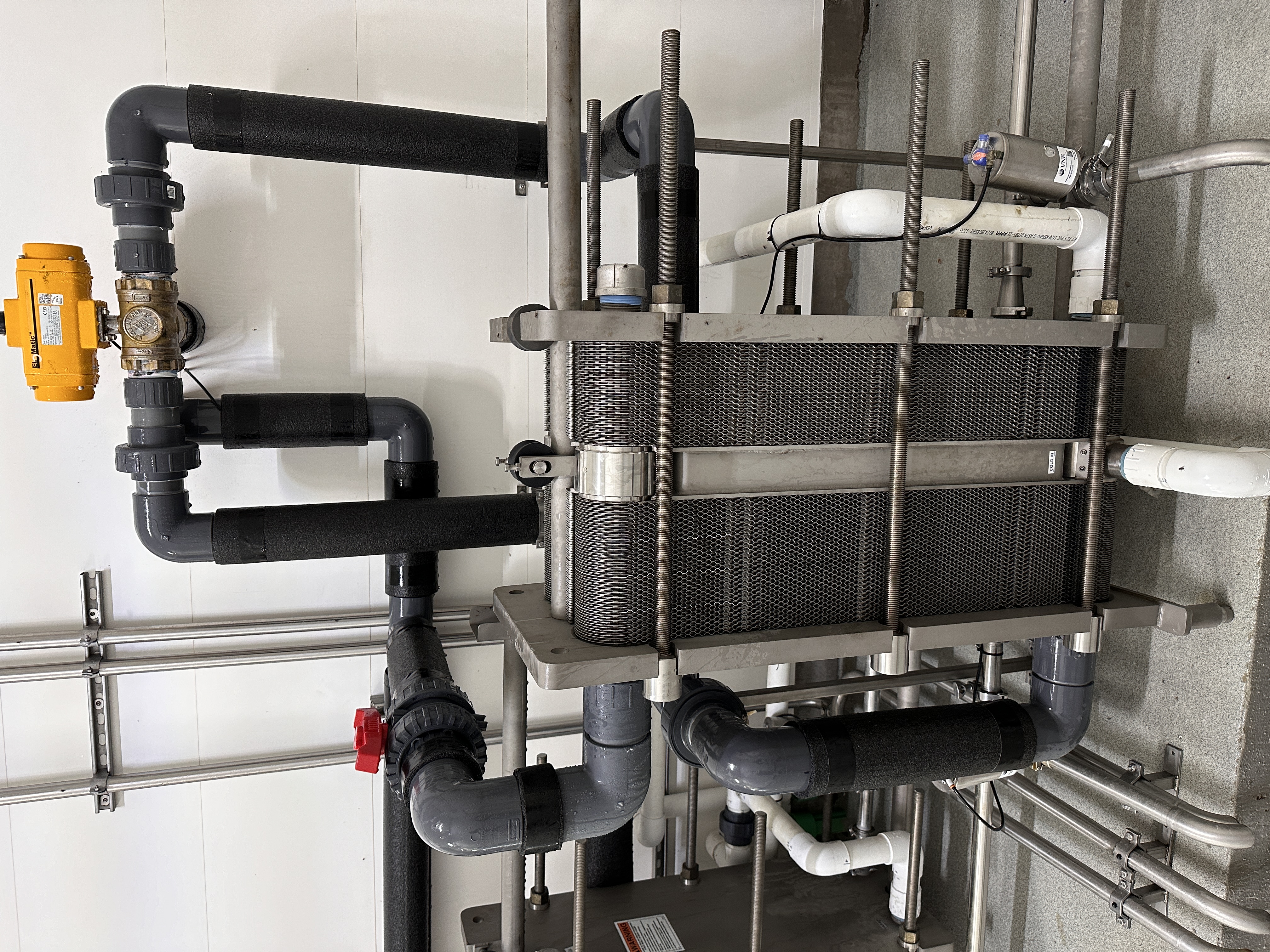
A heat exchanger cools the milk from ca. 100F to 50F
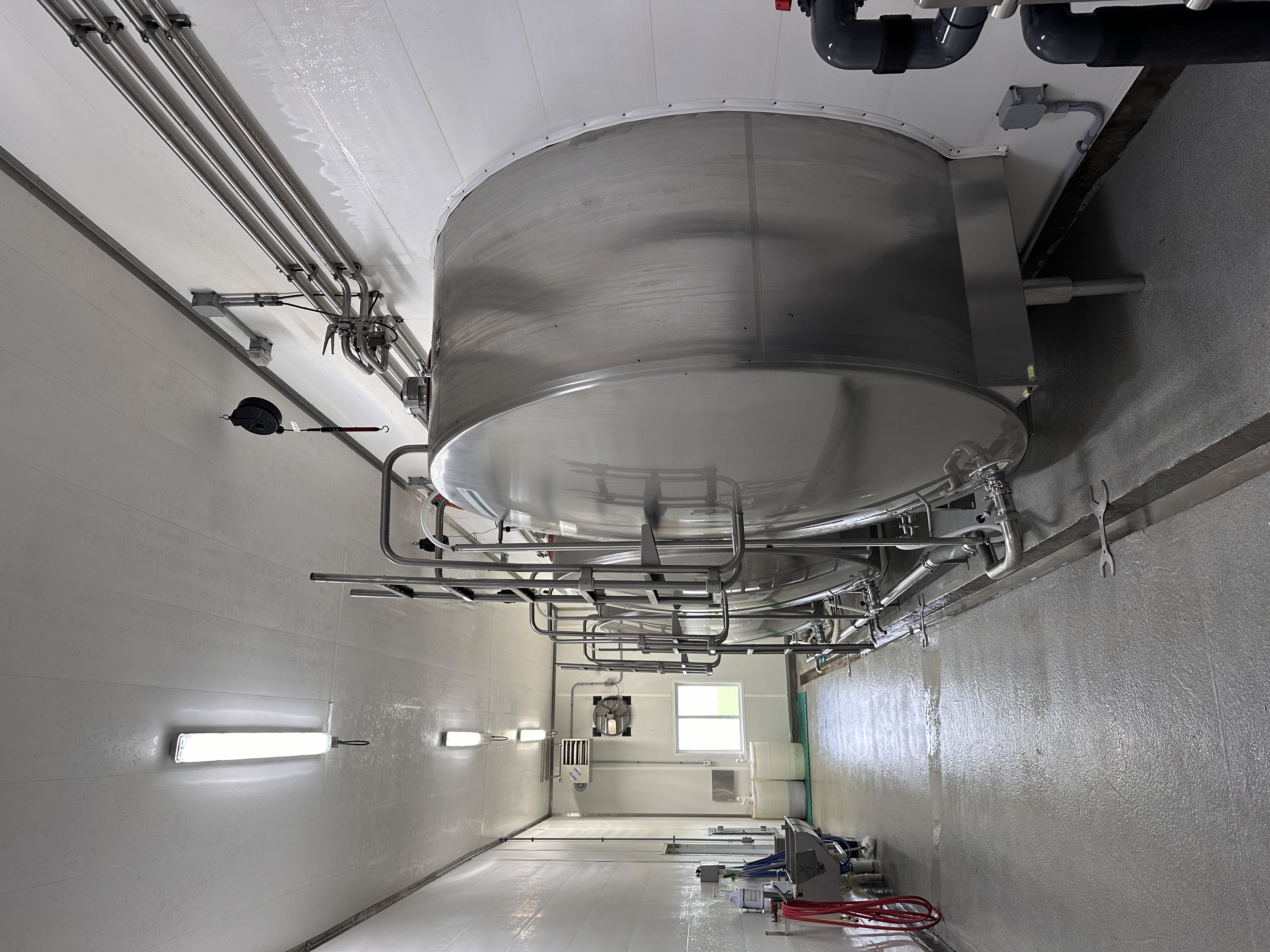
Milk needs to be cooled below 45F. These tanks, are lined inside with
cooling elements. Those proved inadequate over time. So the family
acquired a heat exchanger, which takes the temperature down from its
initial ~100f to 50F.
The tanks keep the milk cooled at below the required 45F
Comparing Cow Variety Productivity
Gauging productivity is a science of its own. For example, some cow varieties produce more milk than Jerseys. But as a statistician friend of mine always admonishes: Look at the denominator! Milk contains particular elements that are the valuable parts. Calcium might be one, I cannot remember them all. But the 'energy-adjusted' productivity is the ratio of these desirable elements to the volume of the milk. Jeseys are queens in this area, though other varieties produce more volume.
Feeding
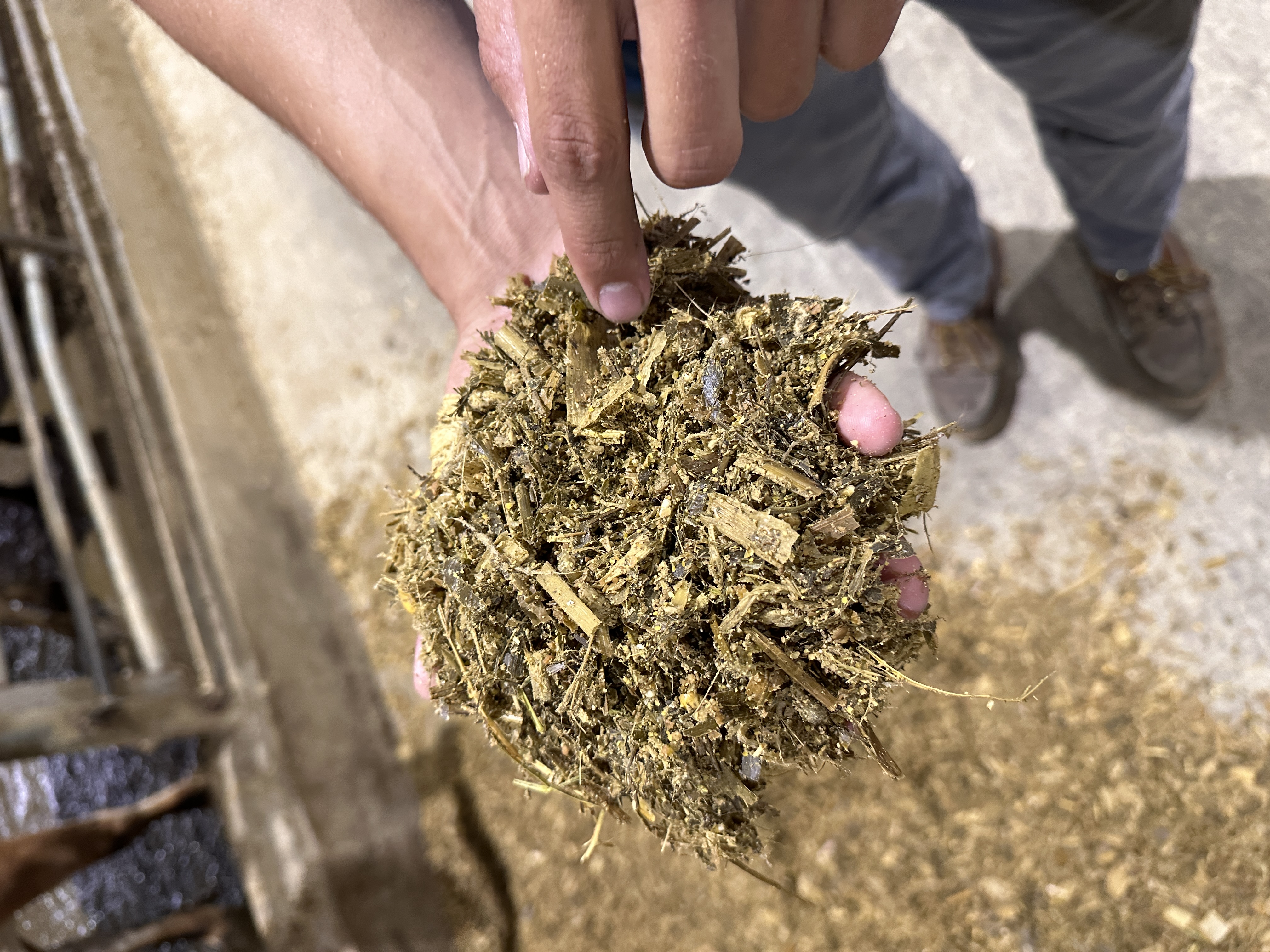
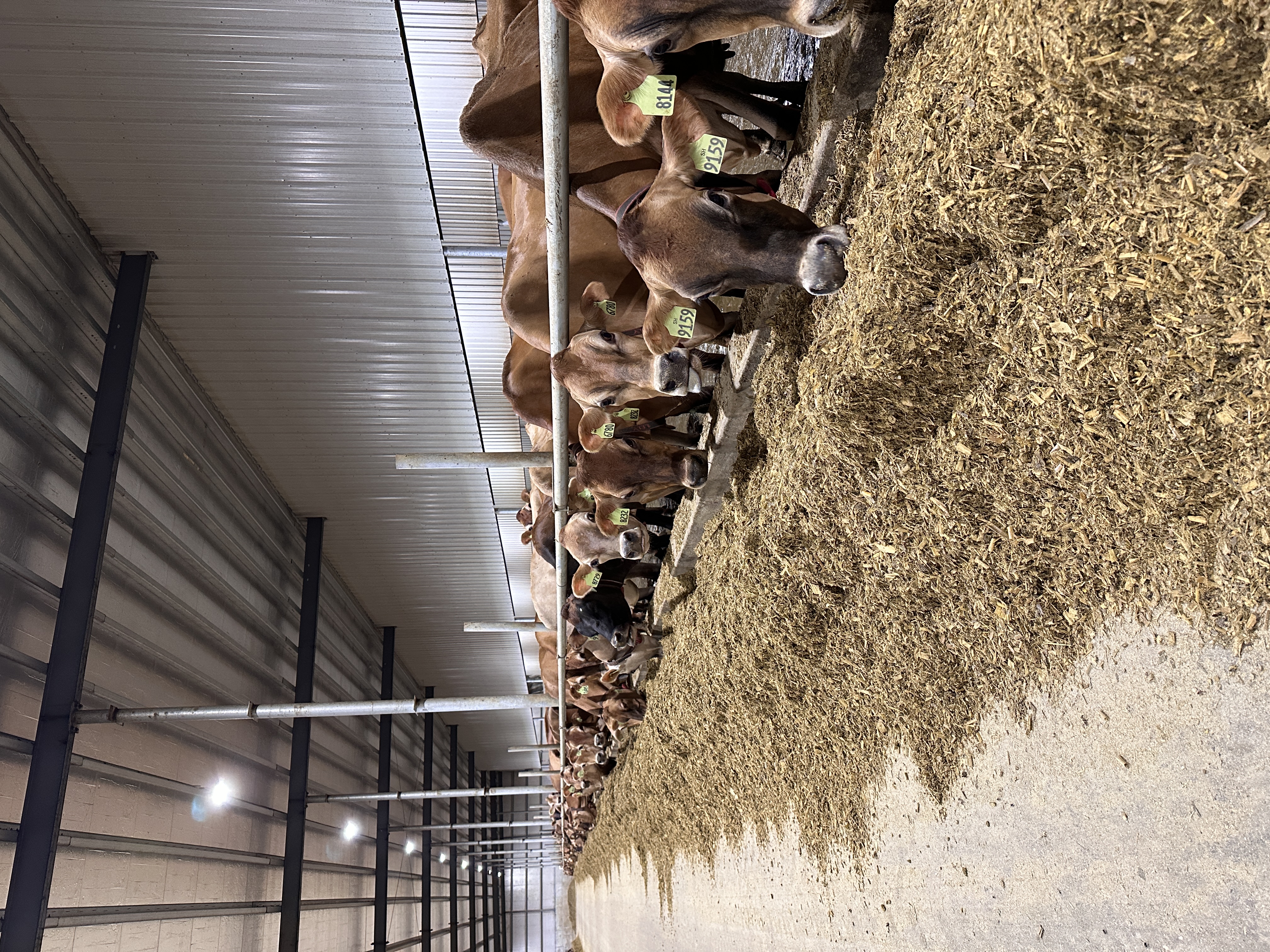
Food is very carefully composed. Adjusting the mix is one of the tasks with which the diary farm consultant helps. The mix contains corn husks, soy, bits of hay, and around 10 other plants. All these ingredients are acquired separately, and are mixed on site.
Notice that the food is kept outside the cow area, so that it is dry and clean.
Carefully balanced foodGoing at itThe cigarette after
Robot Care
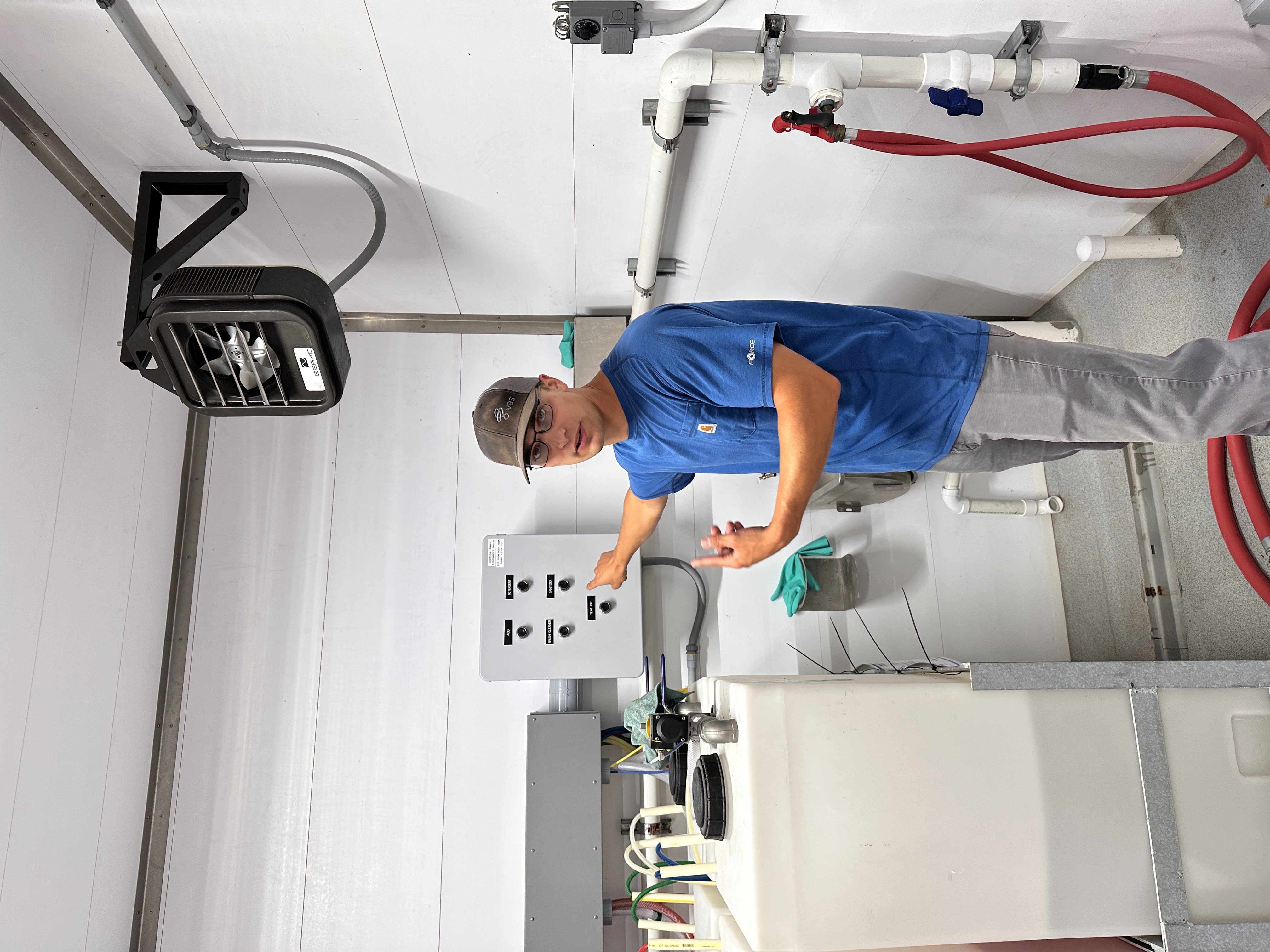
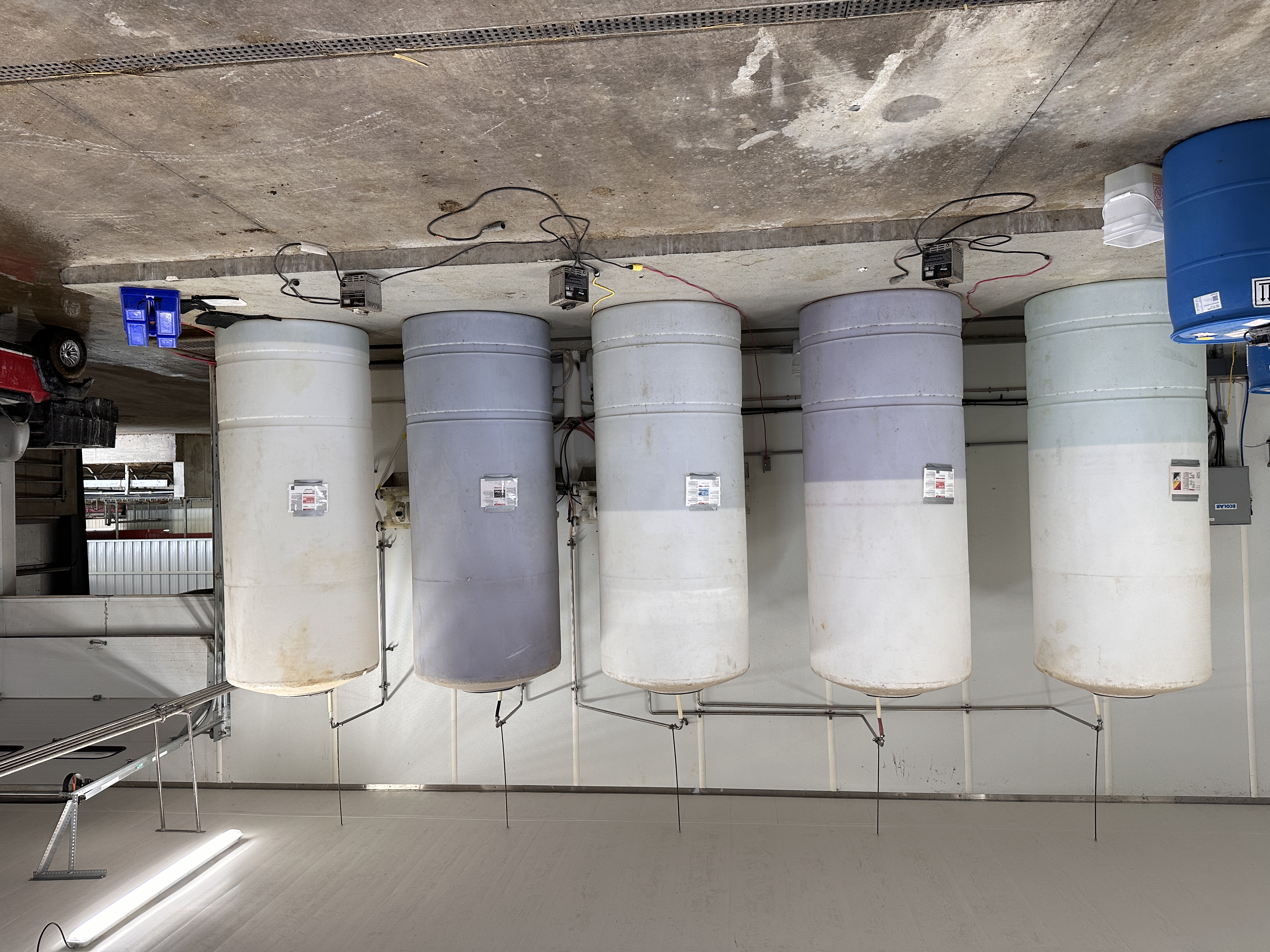
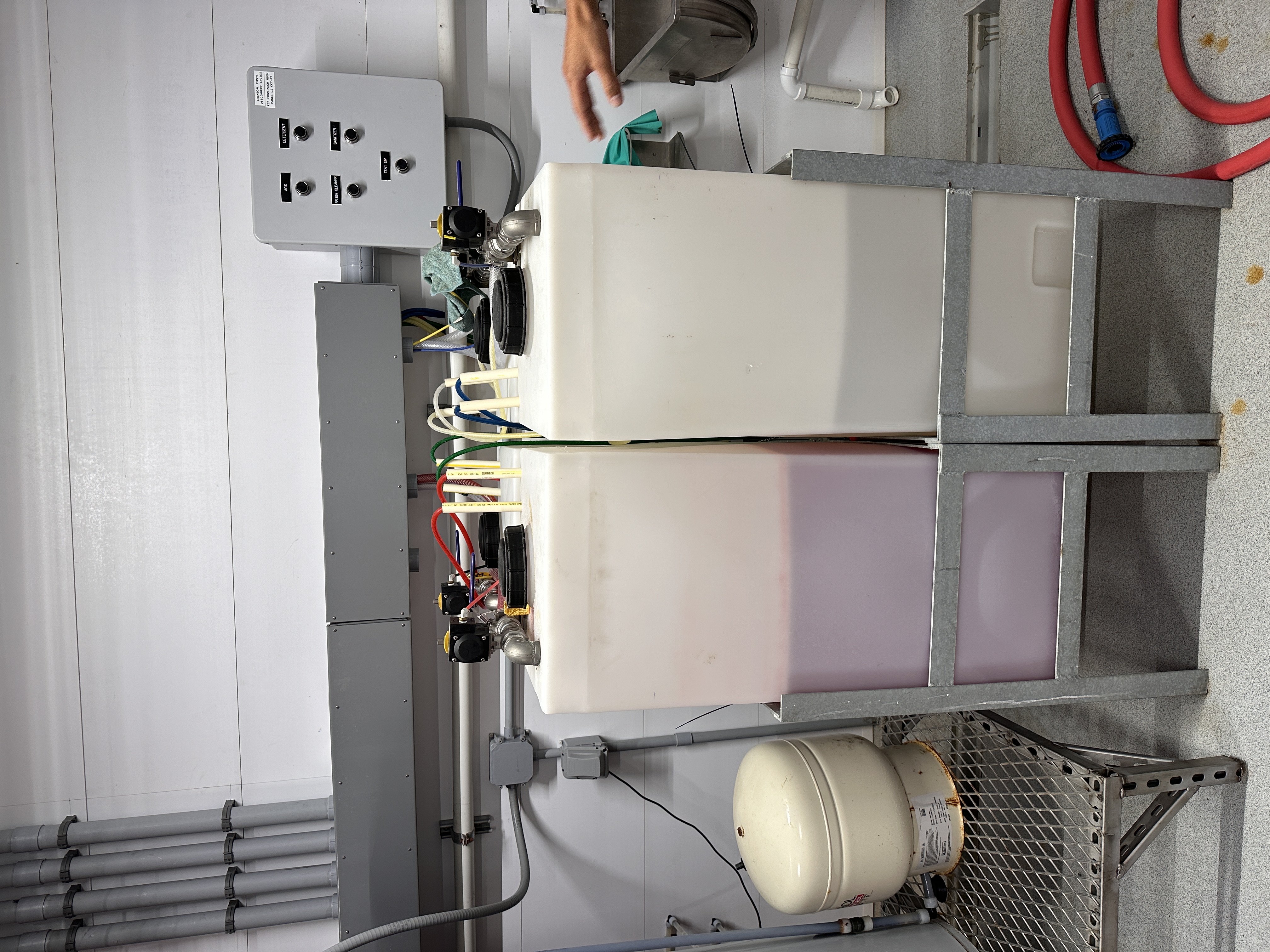
Caustic cleaning fluid remains untouched by humans
The robots are constantly moving, and thus need maintenance. They, as well as the
tanks, also need continuous cleaning. Related caustic chemicals are delivered to
these tanks. Untouched by human hands they are forwarded to their destination containers
through pipes. The owner family is clearly proud of how they treat both the cows and the
employees.
Robots going down is a no-no. Beyond the productivity loss, the cows need to be milked.
The site therefore stores one of each constituent parts, and relevant employees have
taken trainings to repair the units.
Robots do all the cleaning
Manure
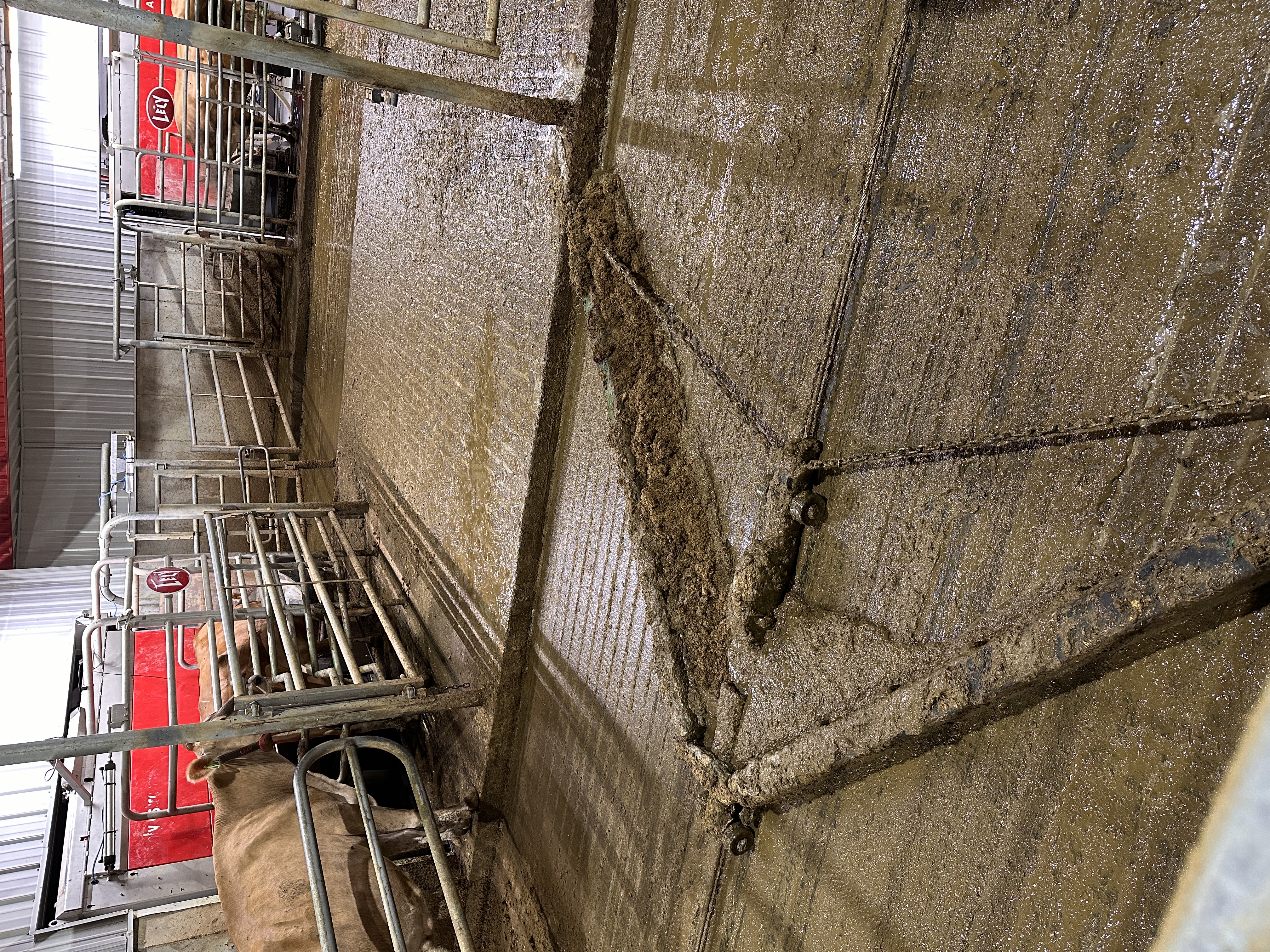
Ah, and the manure. This device replaces my pushing the shovel. But just as
with my childhood efforts, it all goes out an opening in the wall onto a heap.
As so many decades ago in the Black Forest, liquids are collected for fertilization.
In contrast to then, when a wagon distributed this nitrogen, pipes run under the
street to fields, and farmers pay for this ready to use, ready at hand gold.
Pulling manureManure is pressed and driedFinished bedding for cows
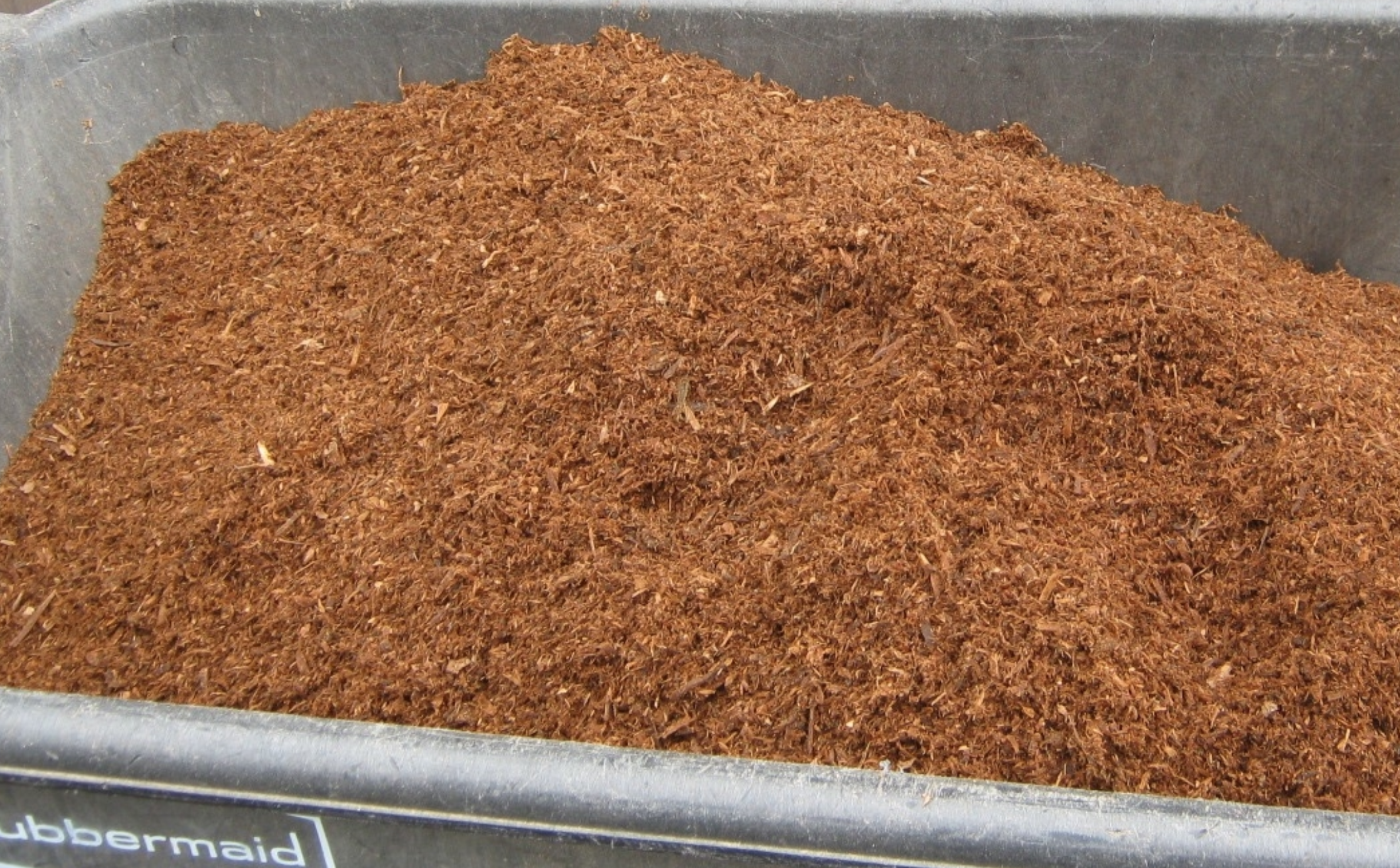
Where things run differently entirely is around what happens with the solids. They are compressed, and dried. The result is high quality bedding for the cows! That is just amazing.
New Cows
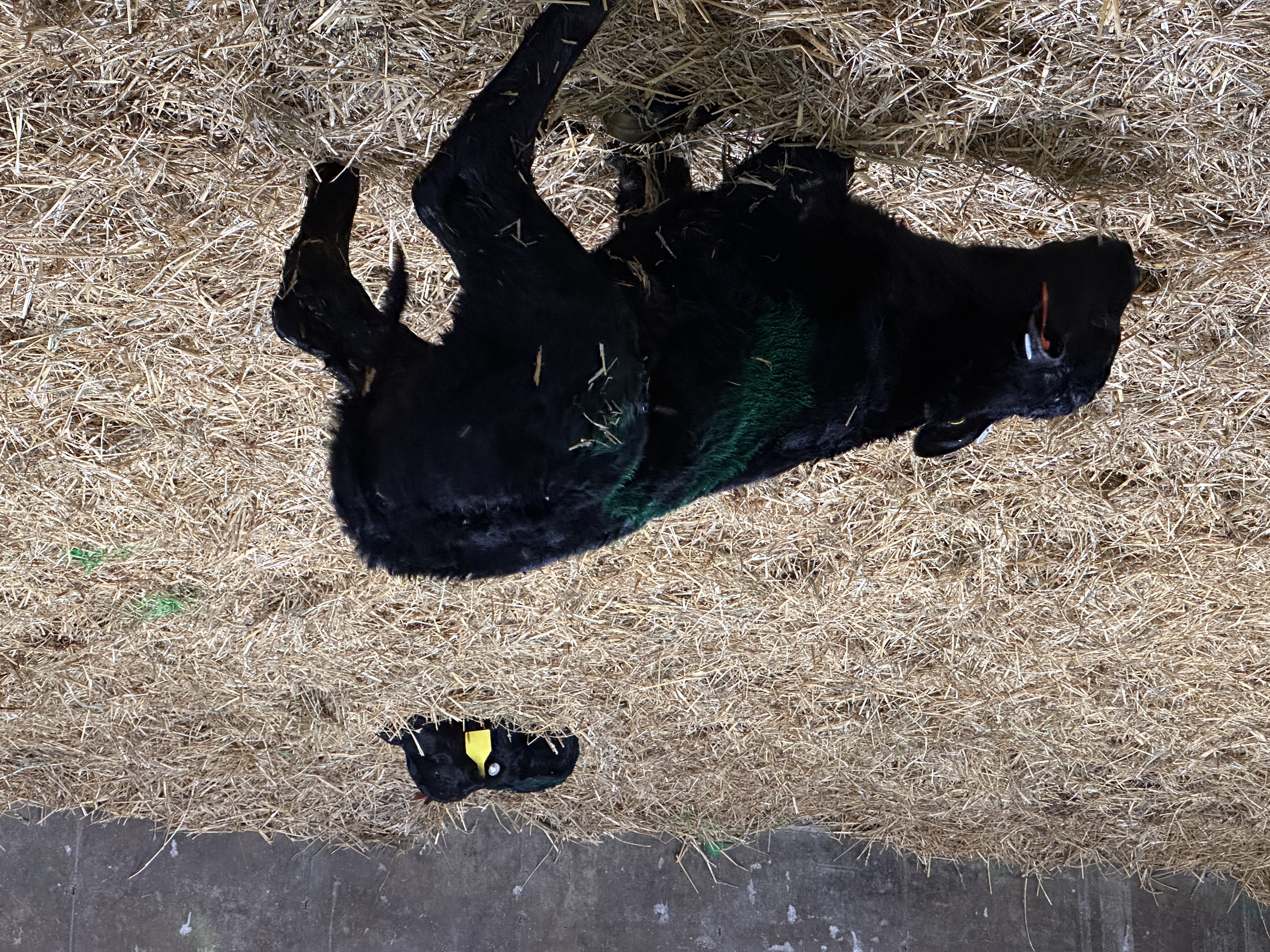
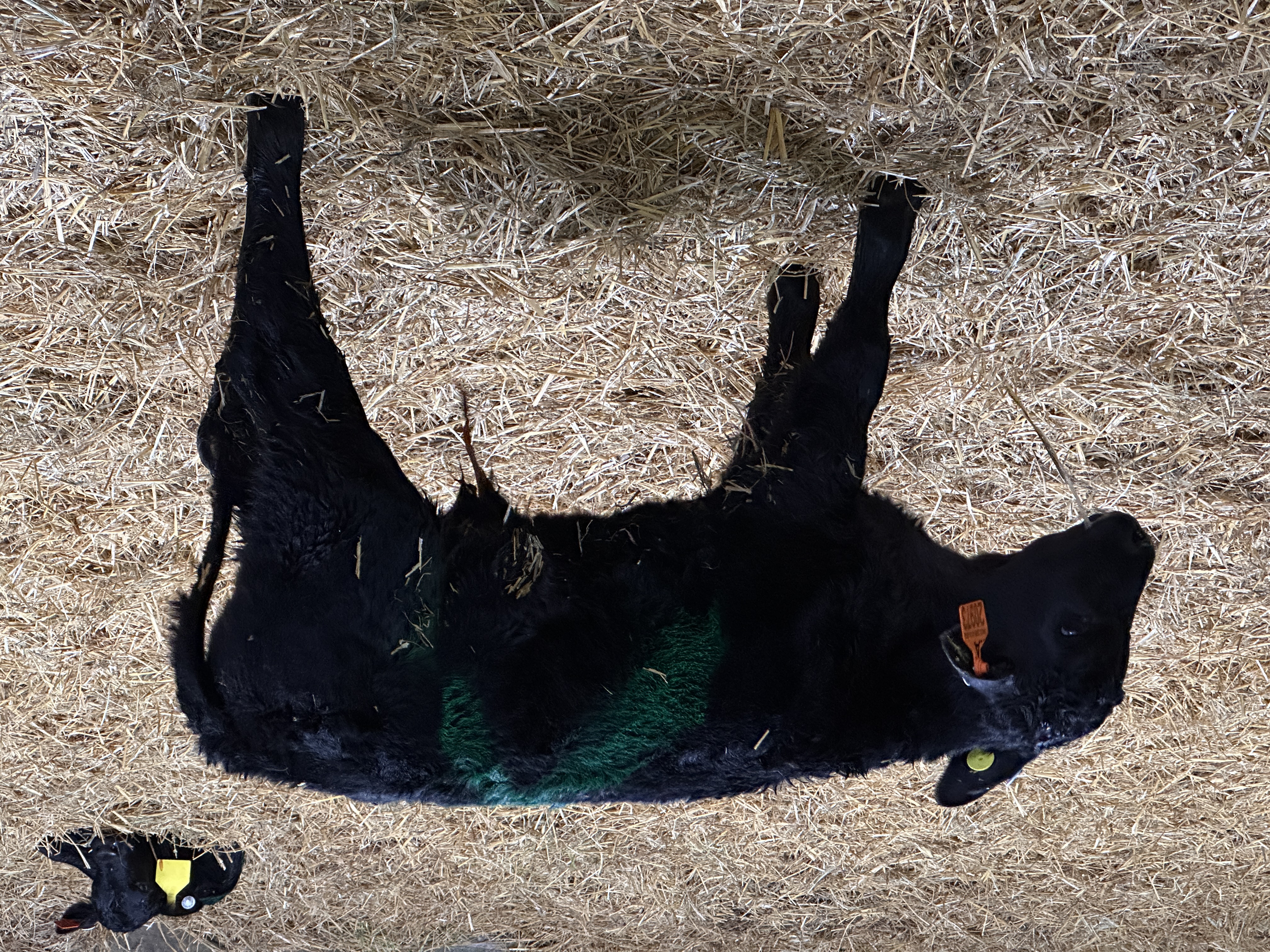
Where do cow babies come from? The Jerseys are bred on the family's farm in Washington State, and then hauled to the South Dakota site. However, the on site cows are also inseminated. Nobody mates horses or other livestock the human way any more. It's all in vitro. But there's a twist: like the cookoo, you can embed an Angus variety embryo in a Jersey cow just fine. Works like a charm. You just must ensure that the siring source was bred to produce small offspring.