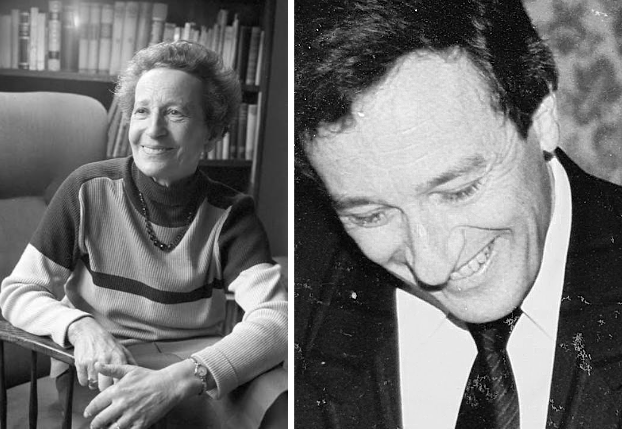
Both crucially affected by the equipment shown here. Neither they nor I would have had our life span to enjoy without World-War II.
Jul 10, 2026
I had it all planned out: from Dubois, North over the Continental Divide at 9,800', through the Grand Teton and Yellowstone parks. Earlyish, because that drive-through worked out to be the worst: a Weekend in July.
Then I saw the sign in Dubois. Ten miles South, away from my trajectory: the museum I could not let go. I checked out early enough to be at the gate before they opened. Knowing that they had a 'Canteen' that served breakfast before then.
Both crucially affected by the equipment
shown here. Neither they nor I would have had
our life span to enjoy without World-War II.
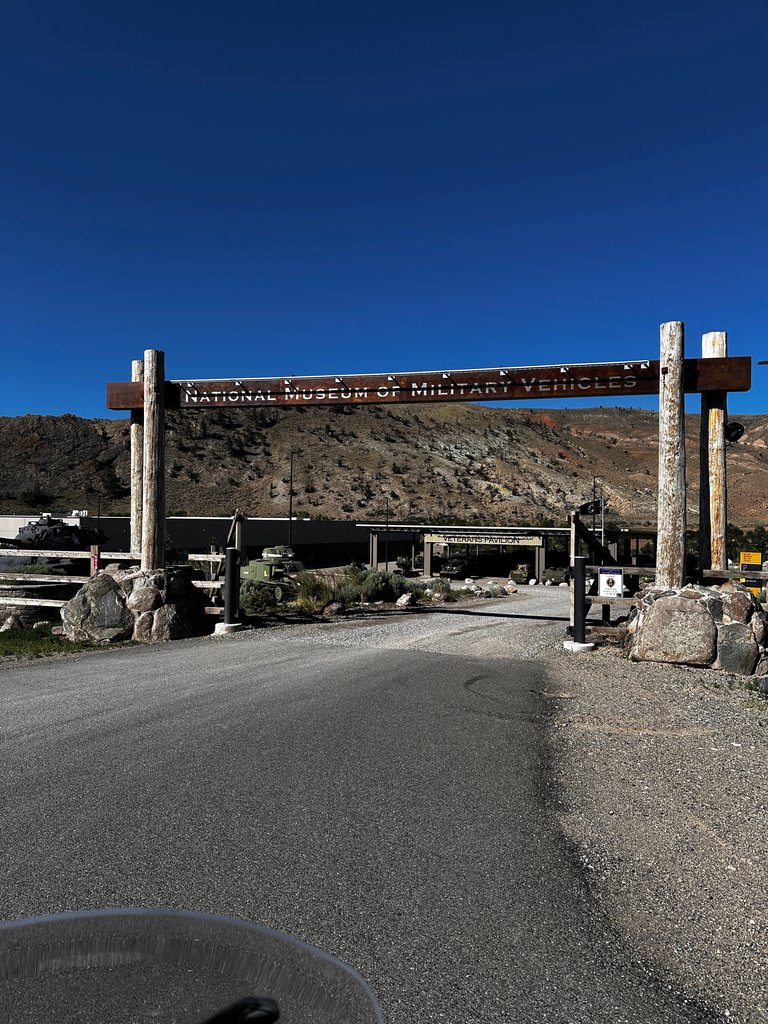
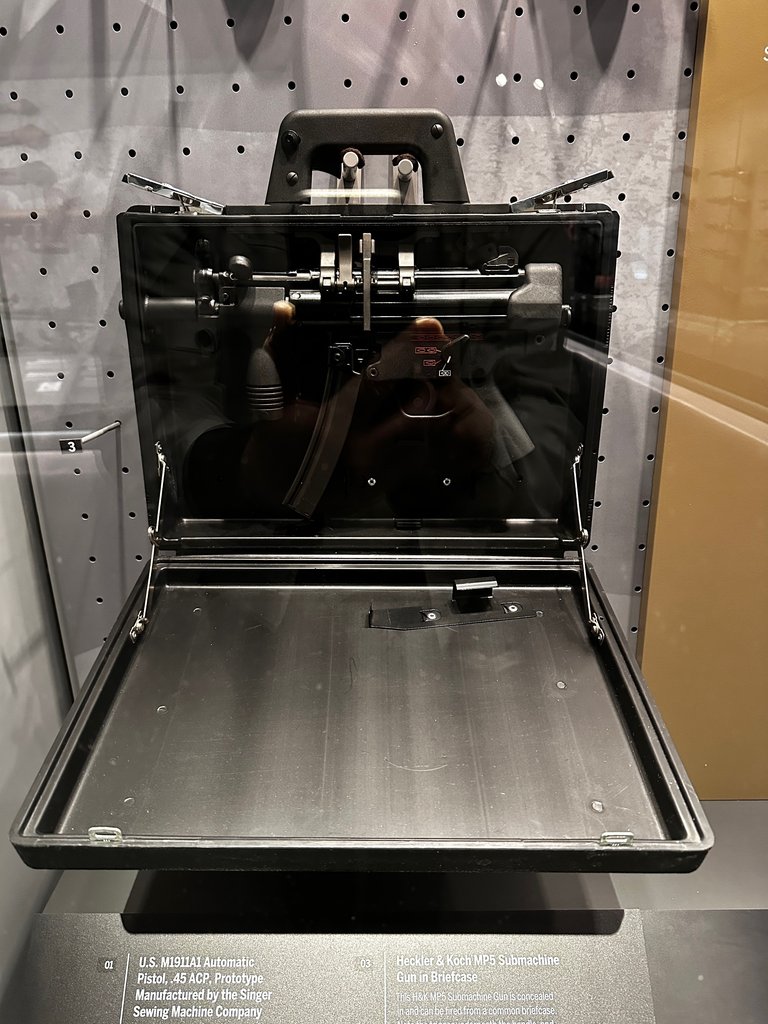
This place is huge, comprehensive, and well presented. It covers WWII, the Korean War, and Vietnam. While billed as honoring soldiers, the exhibits are technical; the plaques explain the military significance of what you see.
There are several entrance discounts available. Veterans, active military. After asking for their conscientious objectors discount, I paid full price. (Kidding! I did not ask that.) And in I went.
I will simply present the photos. Too many, I'm sure. But the title told you the content; you can skip. In my family the Holocaust and WWII are strangely intermingled. Both my brother Peter and I were/are emotionally tied to that War. Peter, because he lived through it during the first ten years of his life. I, because without the US, British, and Soviet forces, and the French underground resistance, my mother would likely not have made it past age 37, and I would not exist. For our family World War II was both, the possibility of death from Allied bombing, and the only path to survival.
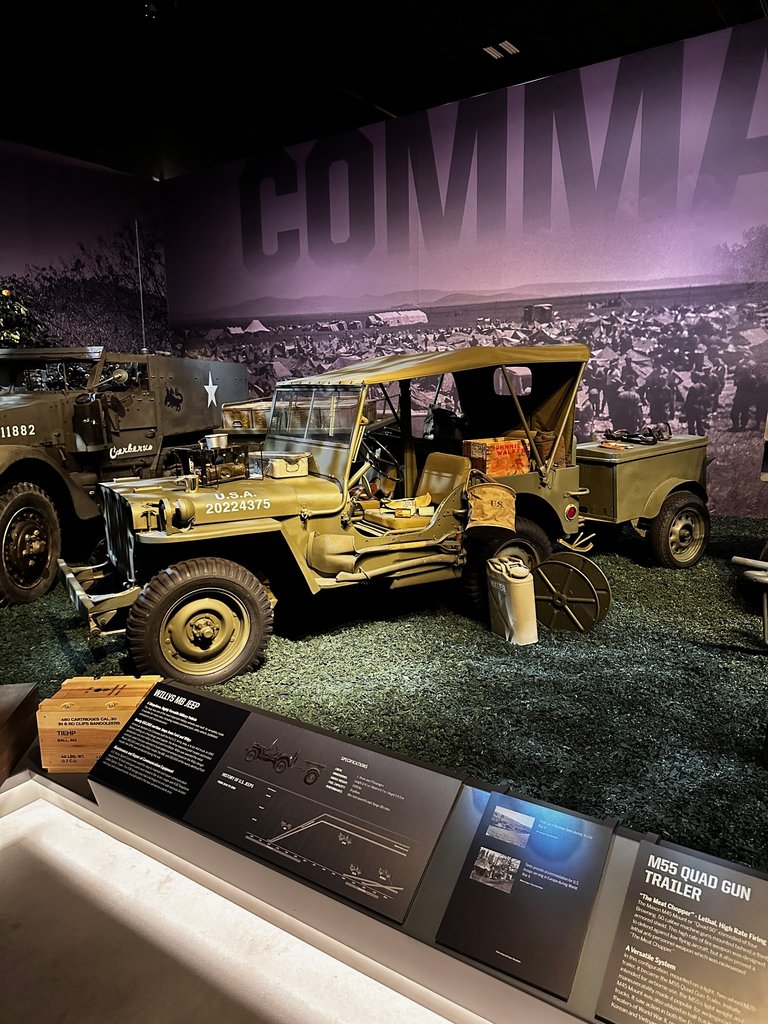
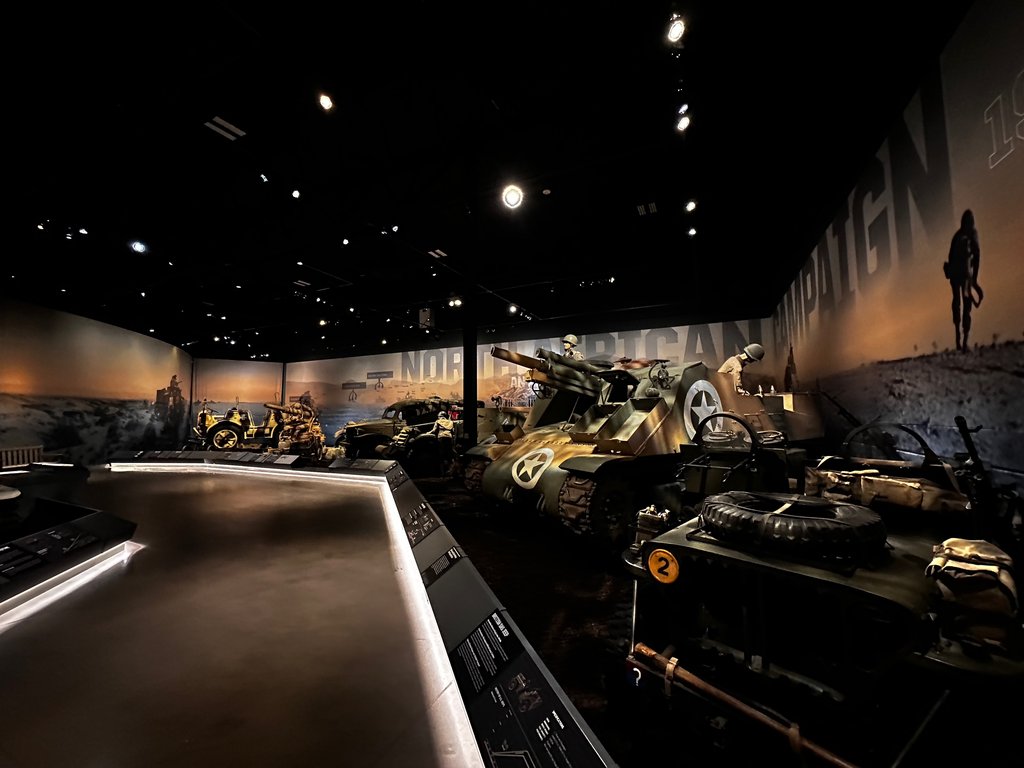

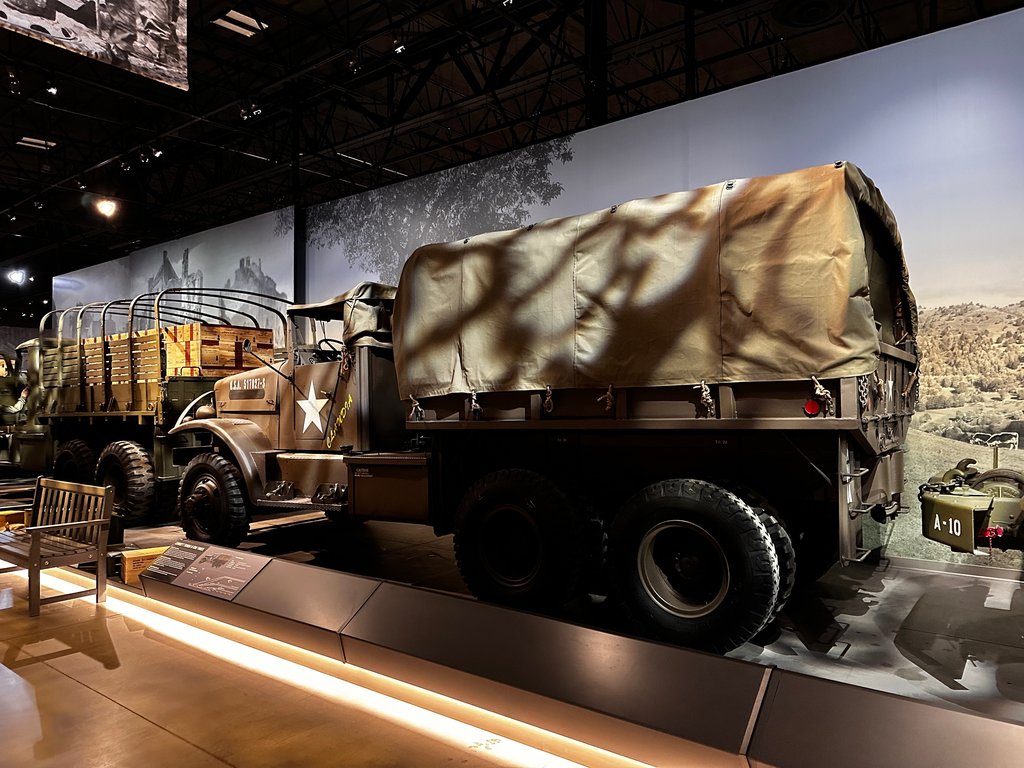
the Autobahn during my childhood
in convoys all the time.
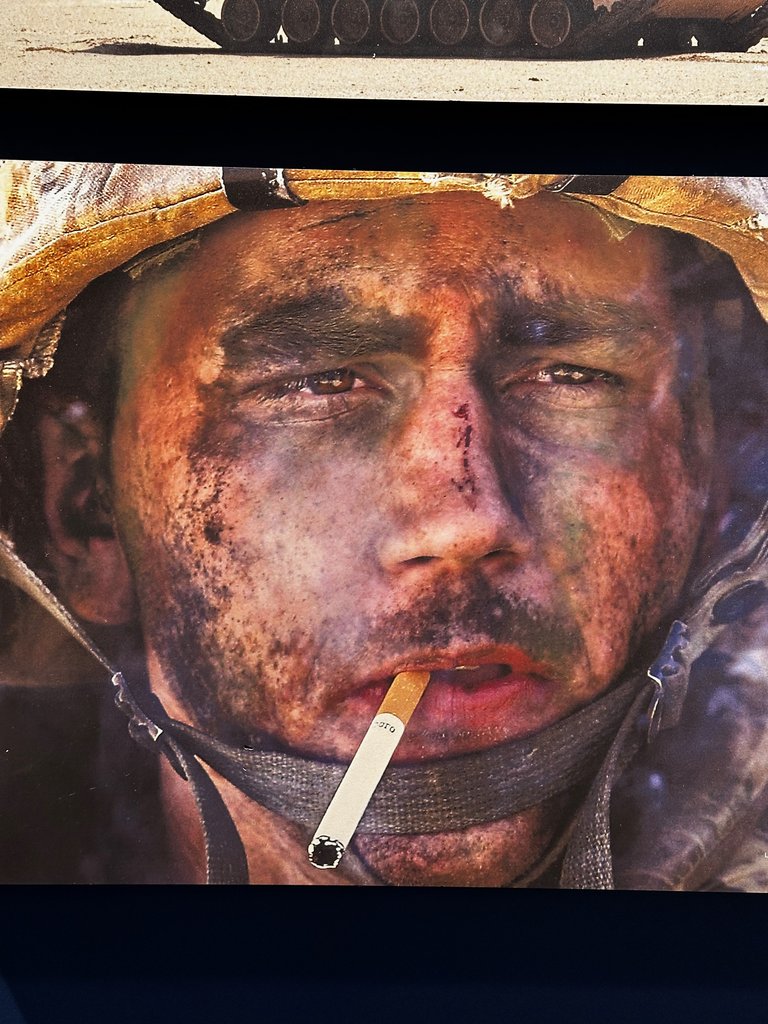
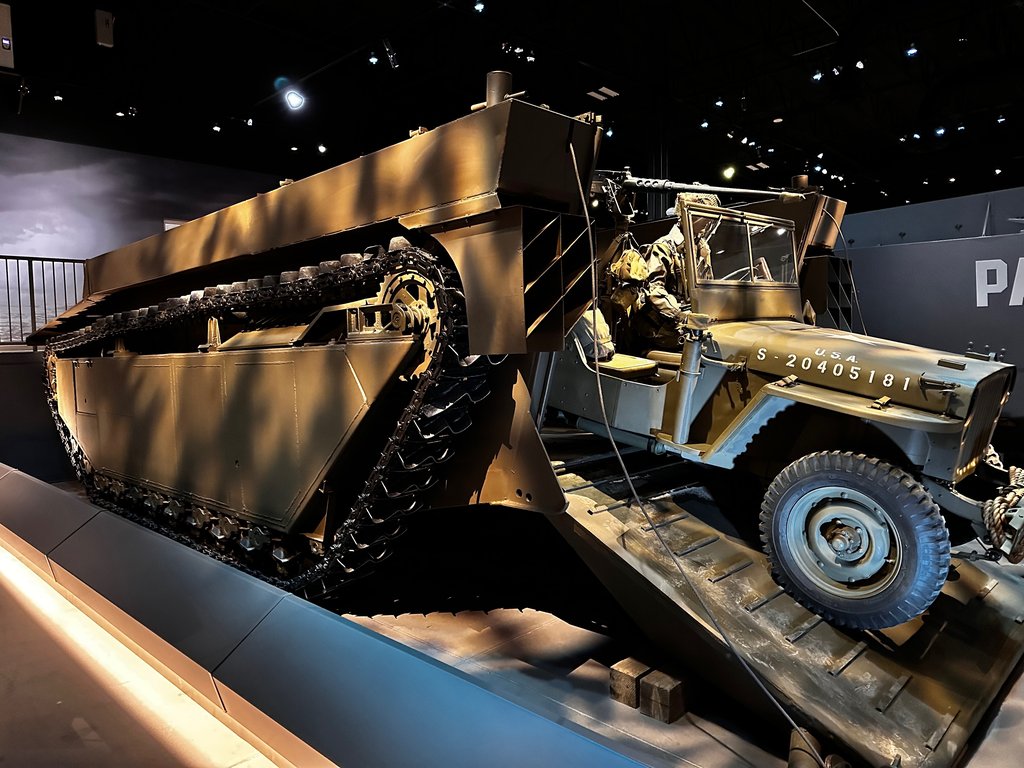
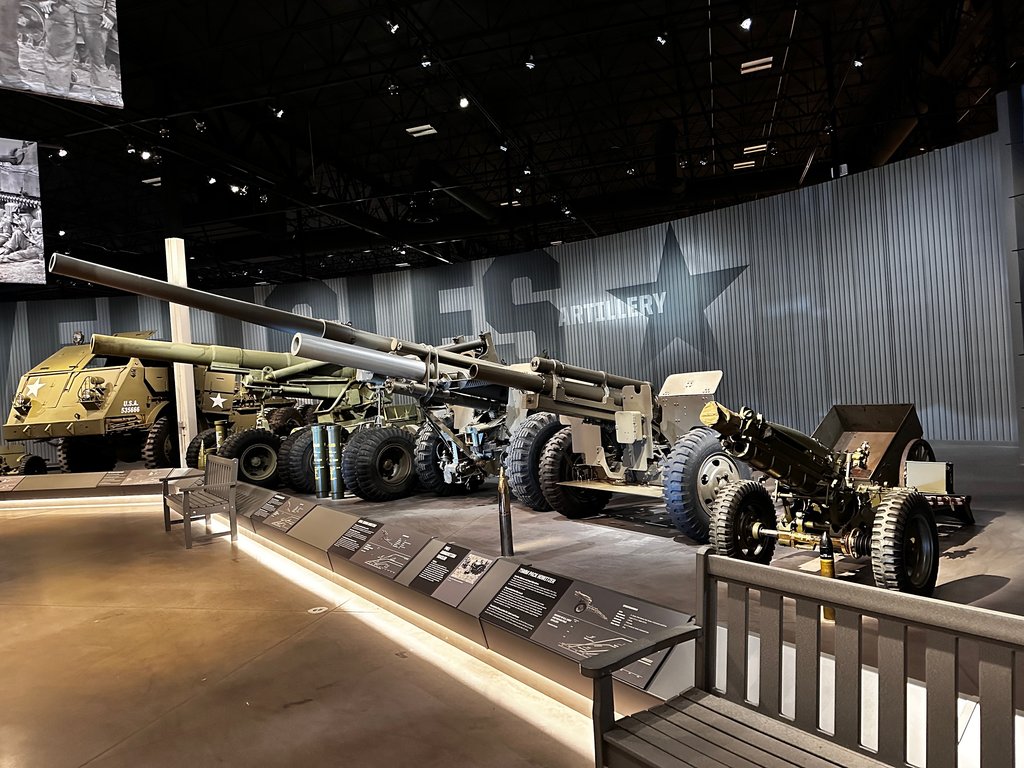
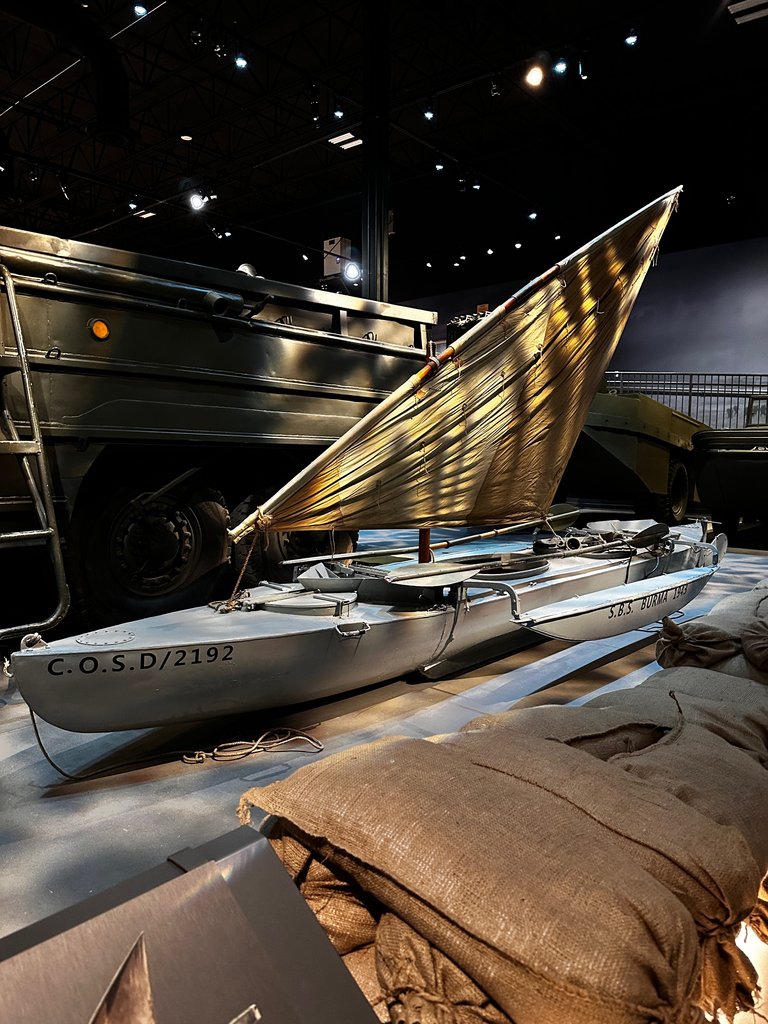
I used to know the allied D-Day beach section code names by heart. Imagine clambering onto any of these vehicles in England, knowing that you would be wading through swells into fire from German fortifications.
Remember, these photos are not of posters. These are the live vehicles.
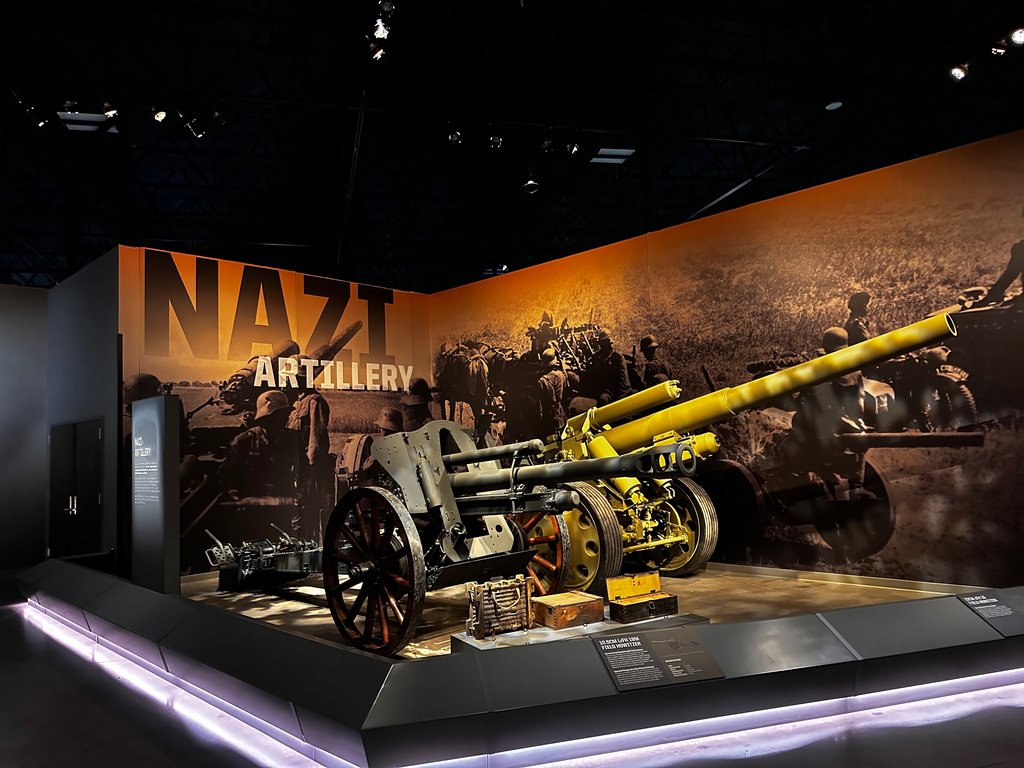
What I didn't realize, and learned from a plaque in the museum is that the US forces were initially quite inadequate along several dimensions. Equipment quantities, quality, tactics, and training. I knew as a child that Gen. Erwin Rommel was victorious in the desert, but I did not realize the extent of US inferiority.
Of course, and I knew this as a boy as well, Rommel was implicated in the Jul 20, 1944 plot on Hitler. Since he was a popular hero, he was given a choice: Take Cyanide, and have a hero's funeral, with the family provided for. Or a show trial with hanging as the outcome.
Rommel picked Cyanide. During my lifetime his son Manfred grew into a successful mayor in the city of Stuttgart.
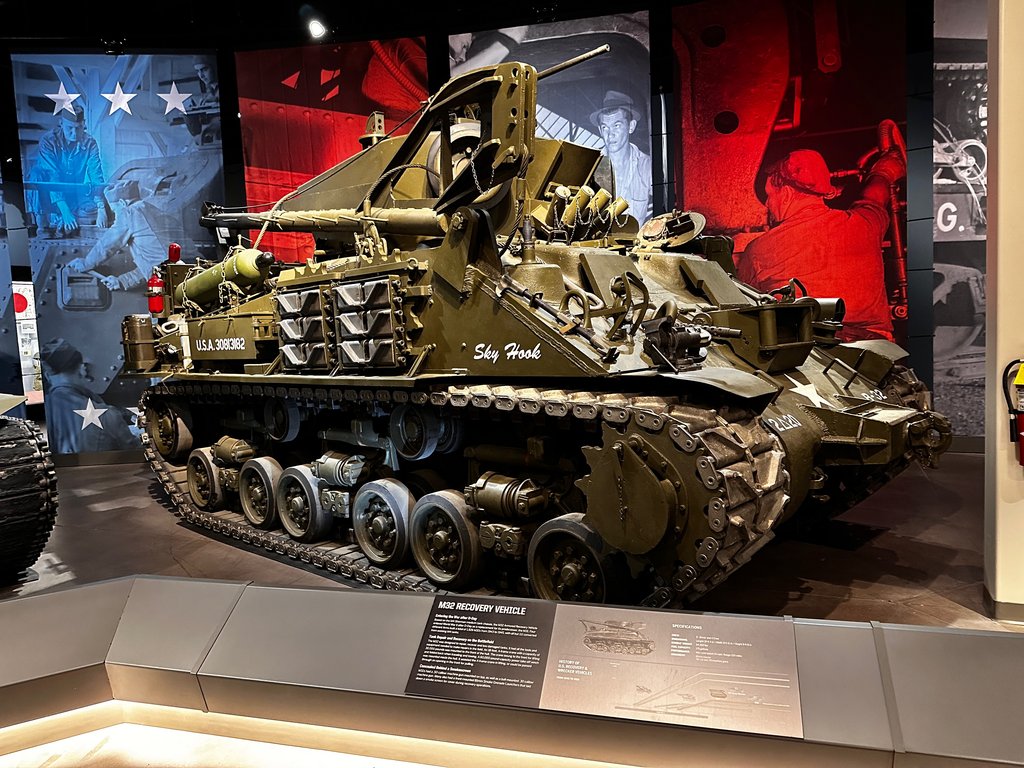
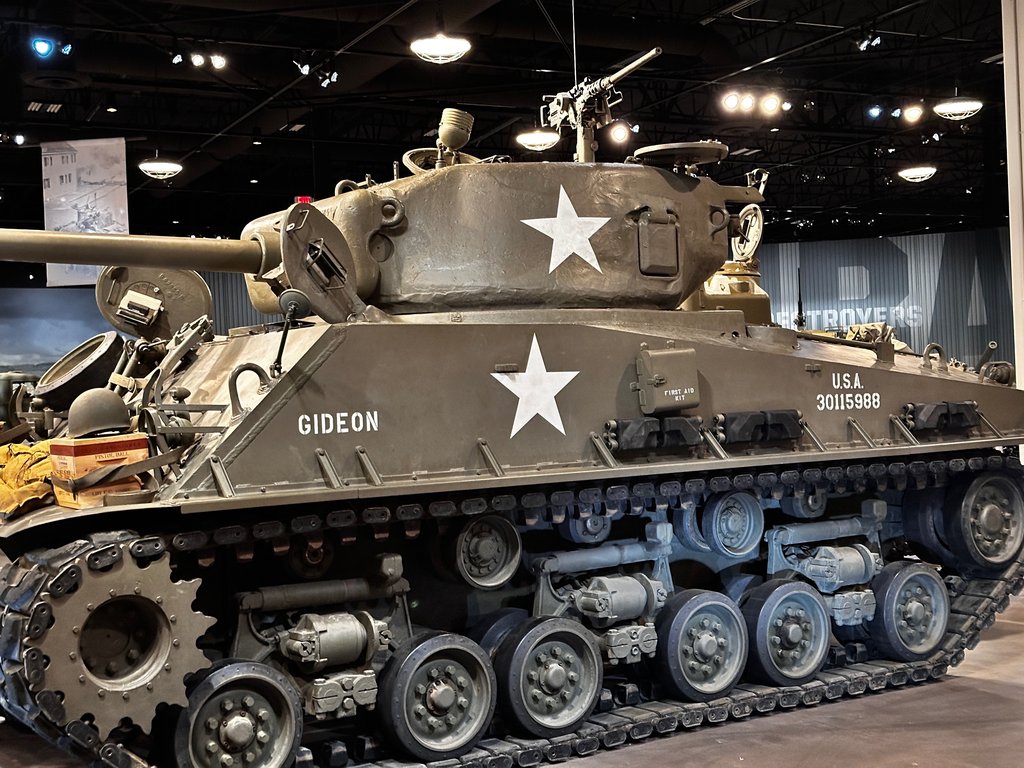
Patton's 3rd Army advanced faster than expected into France, and supply logistics deteriorated to critical. From ammunitions to gasoline, to machine lubricants, everything grew sparse at the front. The Allies had bombed rail lines ahead of D-Day, and the German still held some needed ports.
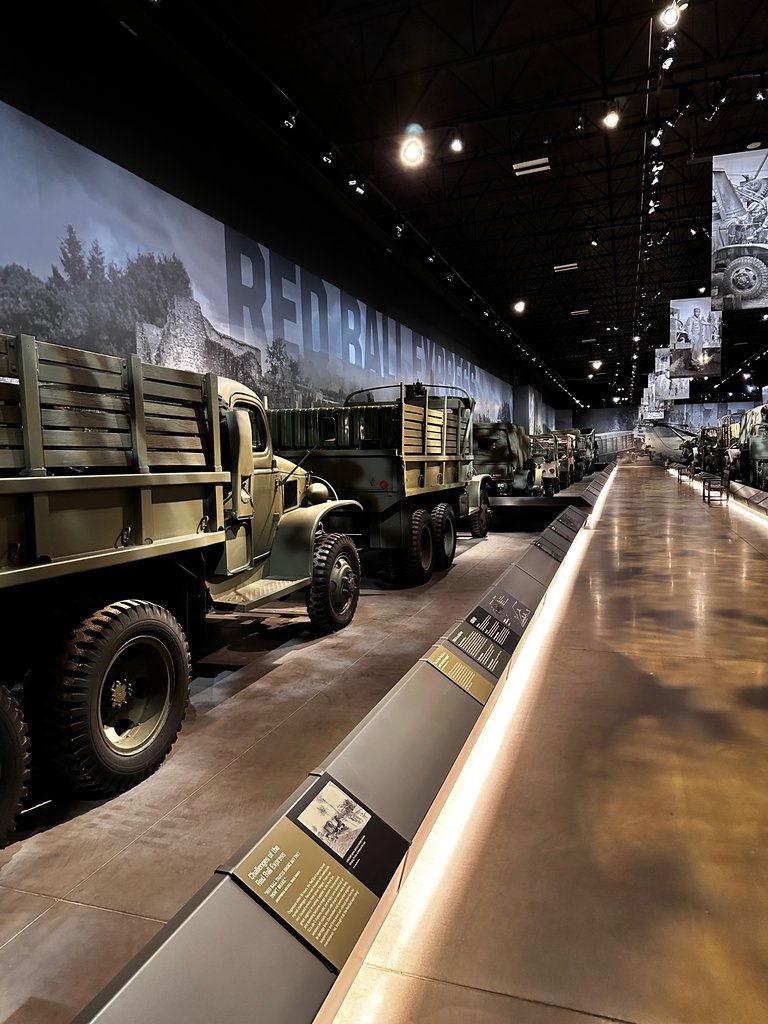
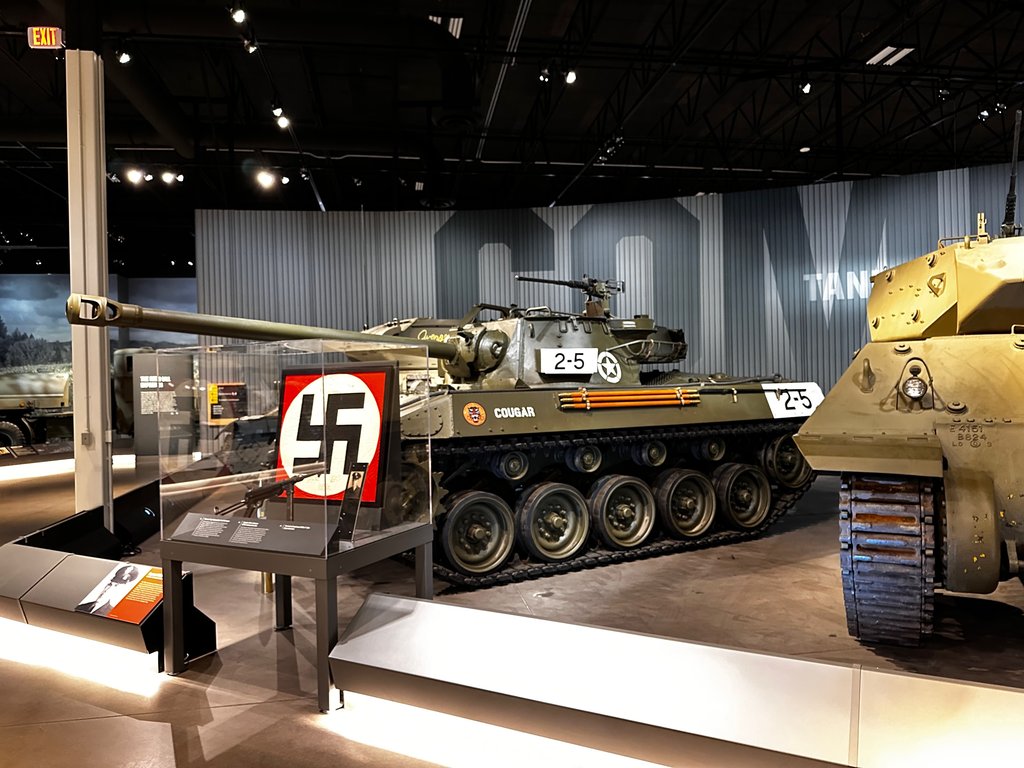
The Allies marked two West-East routes with red balls. Both were blocked for civilian traffic. Along the Northern route, 6000 trucks carried supplies one way East, at a capacity of 12,500 tons a day. The Southern route, also oneway, carried the empty trucks back.
The trucks ran 24/7, with headlights covered to slits at night to avoid attack.
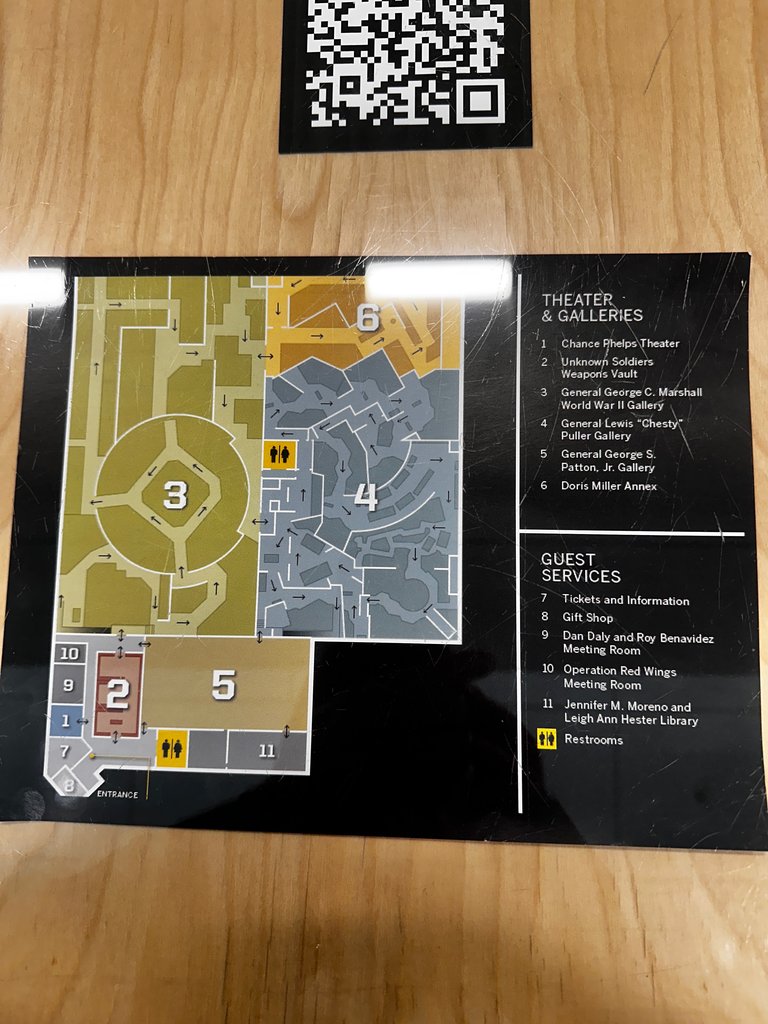
Instead of the lobby, I found myself in a jungle experience.
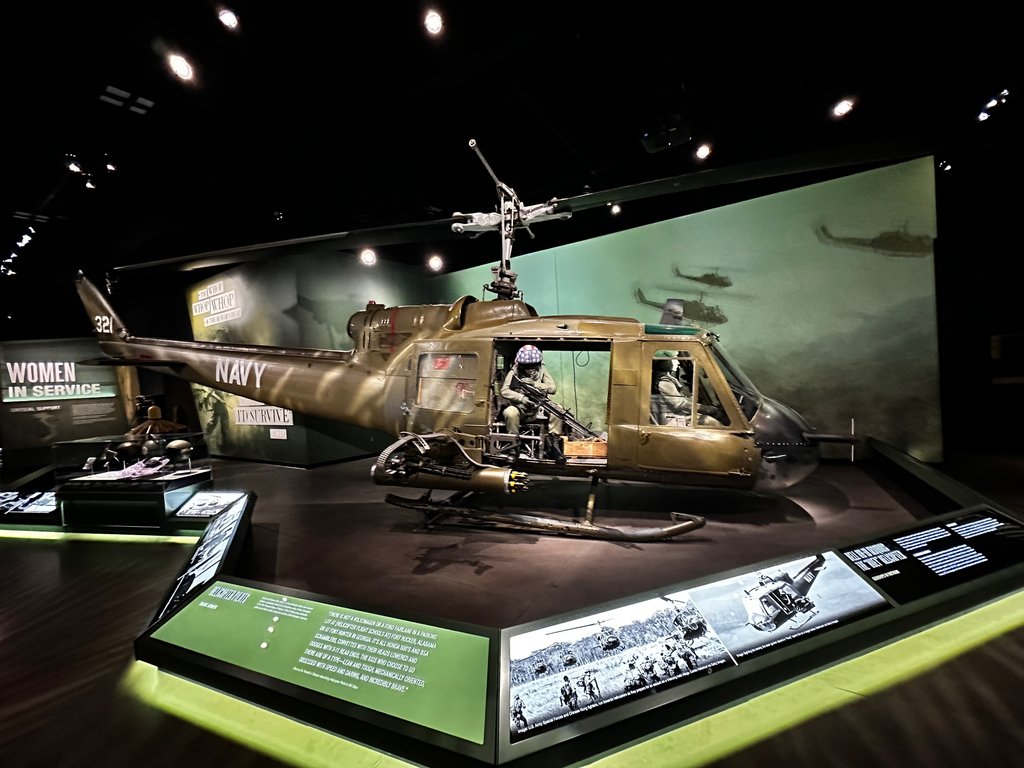
helicopters behind, and sound track

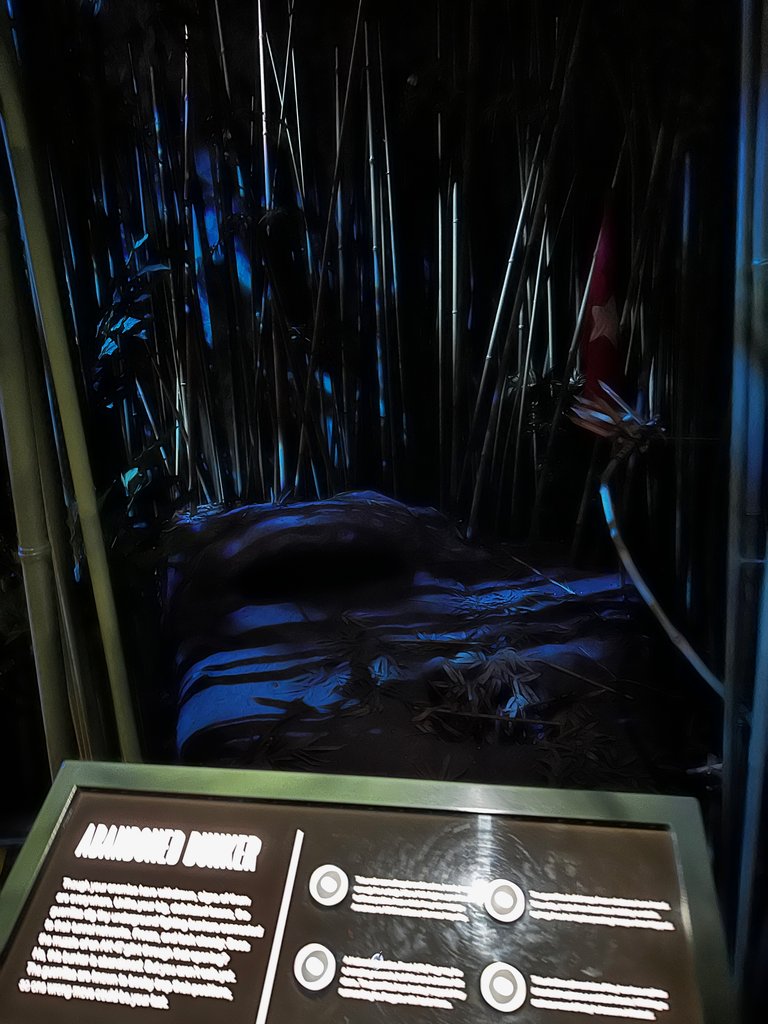
In an increasingly frantic search to get out, I was suddenly in a dark jungle experience. I'd stumbled into the Vietnam War. The 'Vietnam traps' photo has you peer into an abandoned Vietnamese underground command post. Pushing each button illustrates how you die a different death as you miss one of the booby trap methods.
After many revisitations of war gear twice my height I finally found my way out. And rolled on my way to West Yellowstone.
