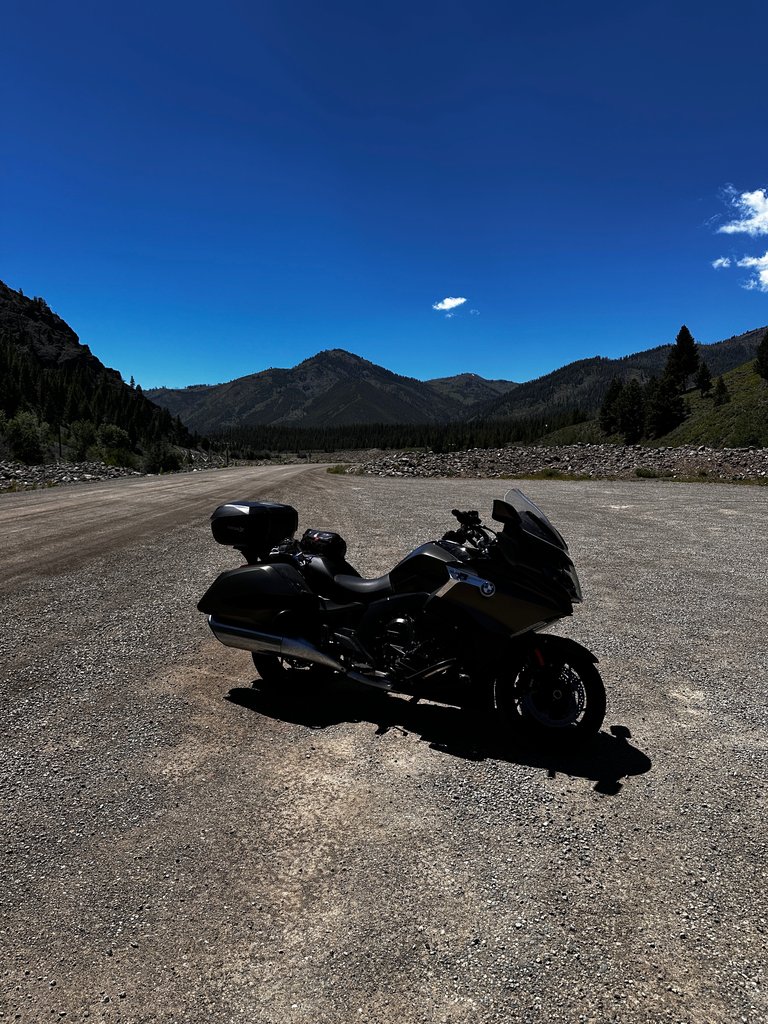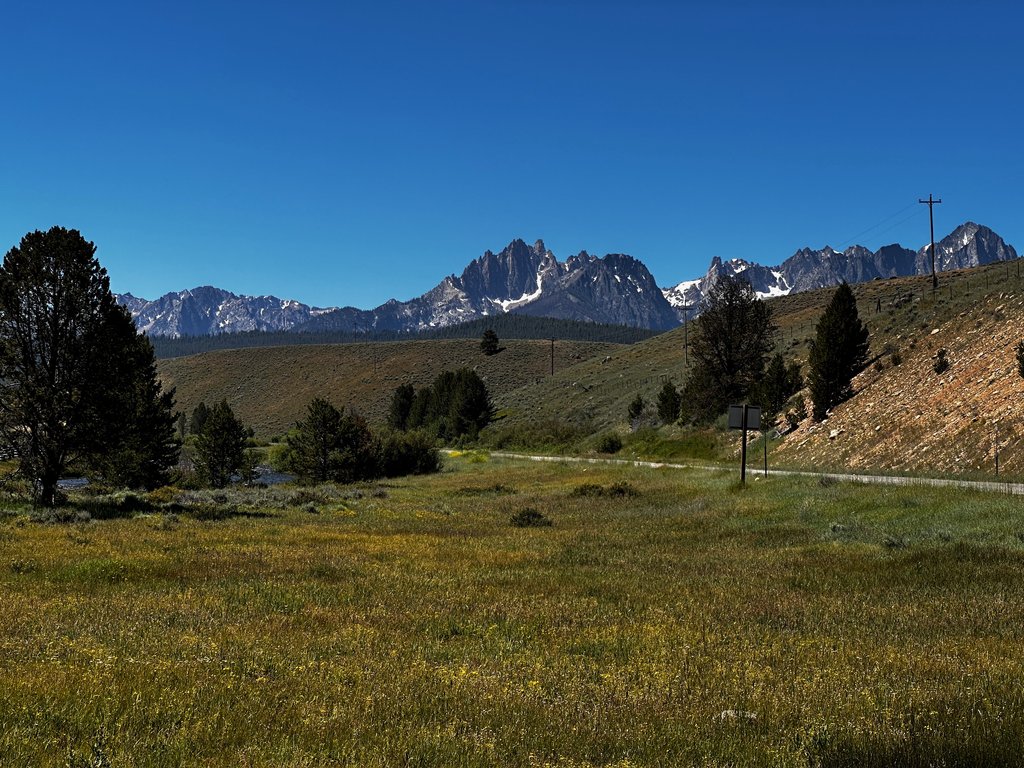
July 8, 2026
I do enjoy them all, downtown Manhattan, desert, the light-industry parts of towns, where sheet metal is bent, autos are repaired, clothes are sewn. Harbors, meadows, oceans, intricate freeway overpasses, and mountains.
But deserts are the most difficult for me. They are wonders of self sufficiency. Plants are not only tolerant of the heat and the dry. They are made precisely for that environment. Sagebrush is not pretty, but I respect its tenacity.
But brutally repressed are the seeds of wild flowers. They are latent beauty. Manifest only for a few days a year, if that. They are hidden promises of opulence and color.
Desert represents for me a minimalist way of living. Needs and desires suppressed. Always fulfilled as mere maybes. Don't count on rain. Be content with dry.
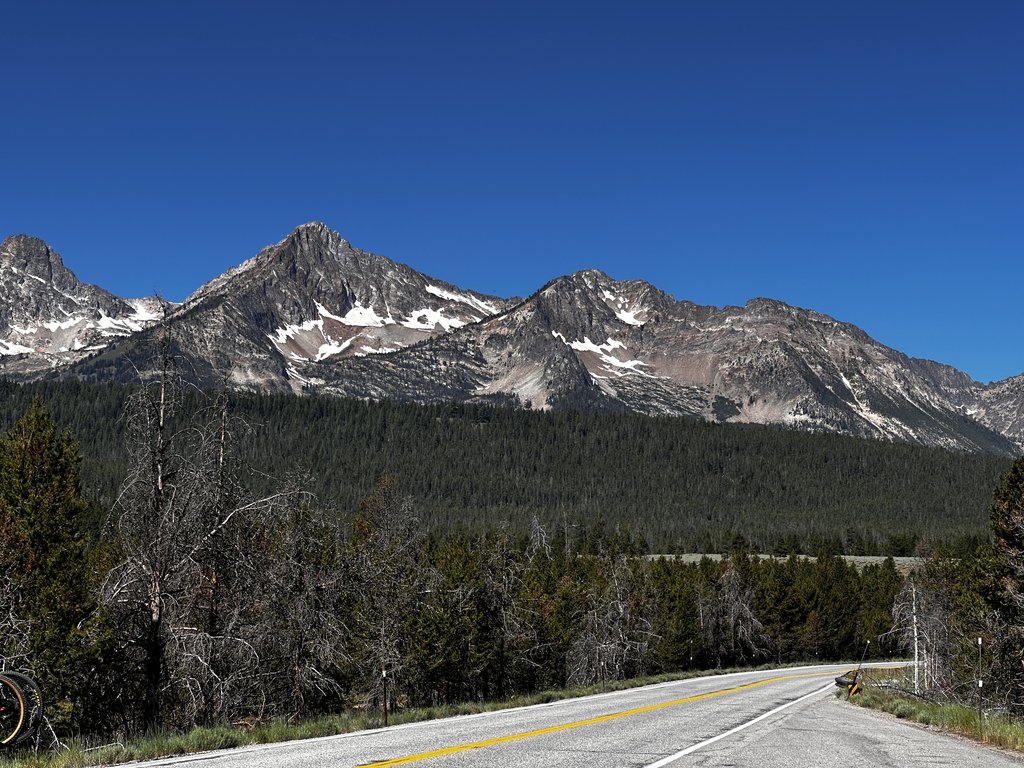
Ascend into mountains, and shapes are clean, massive, reliable. Created usually from massive catastrophe, fast or slow, they now stand as solidly, confidently, as I want to stand in life.
Granite is my favorite. Light colored, and barely breakable. Pine trees compare with the Sagebrush. But the trees don't bend, save those near the barren tops of truly uninhabitable peaks. Only those are the sagebrush of the mountains.
I do know that deserts harbor lots of life, including animals. But they don't burst with abundance, as some mountain landscapes do.

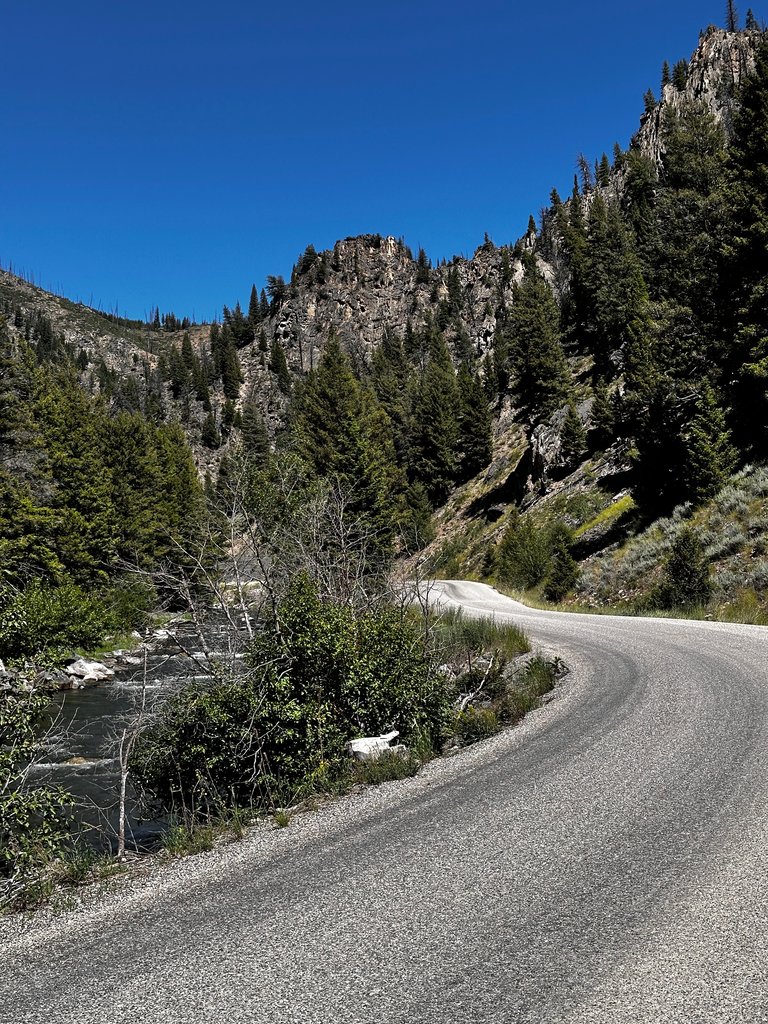
Along the way near Sunbeam the Yankee Fork Road leads eight miles into the mountains. I couldn't resist, albeit with trepidation. The promise: at the spur's end I would find the 988-ton Yankee Fork Gold dredge. Why the trepidation? It's a G-road: gravel.
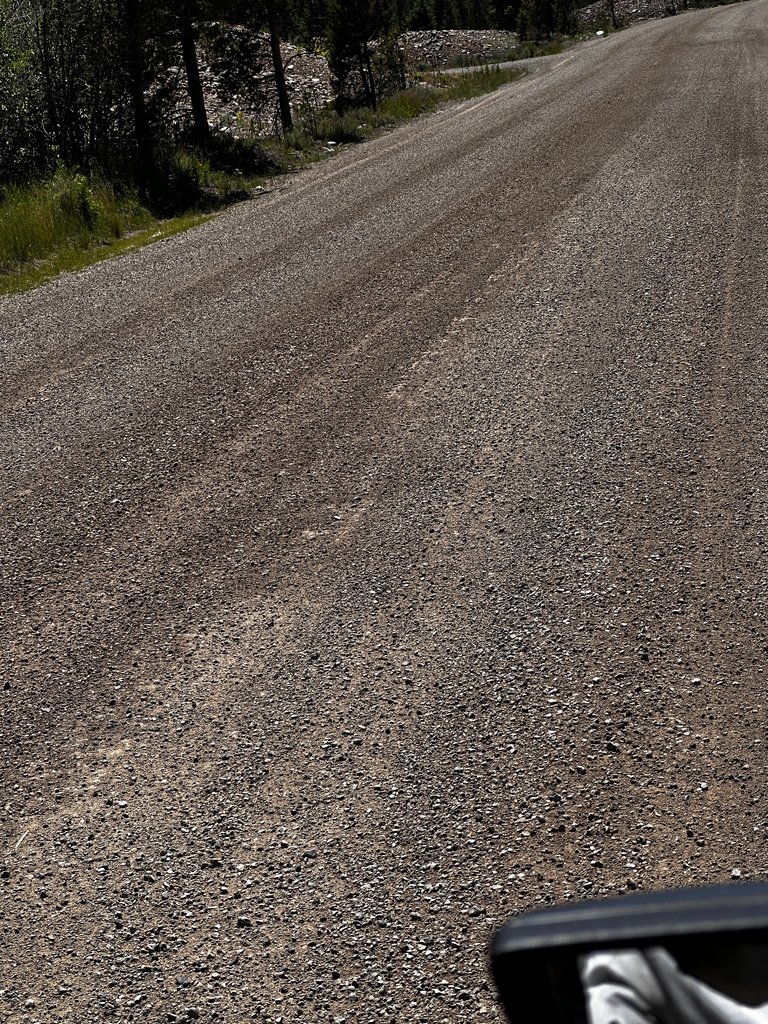
My bike is not built for off-road. What I didn't mention earlier is that what motorcycles don't like is sudden change. A bit like me. That includes fast decelleration. When braking on this surface, you want to do it slooooowly. Which can be incompatible with having something get in your way.
Sometimes roads like this are almost packed solid, which is great. But they are also known for sudden accumulations of gravel. Those make the bike fishtail. Not much, just enough to keep the heart rate going. That road provided the day's cardio moments. The dilemma is that getting out of fishtailing is easy; you accelerate a bit. Yet, that again is incompatible with staying slow enough that you can break slowly.
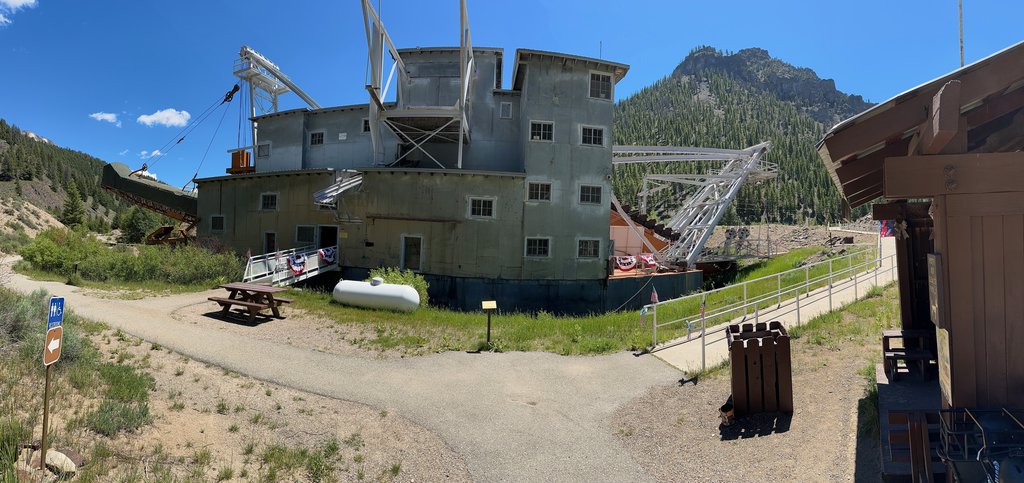
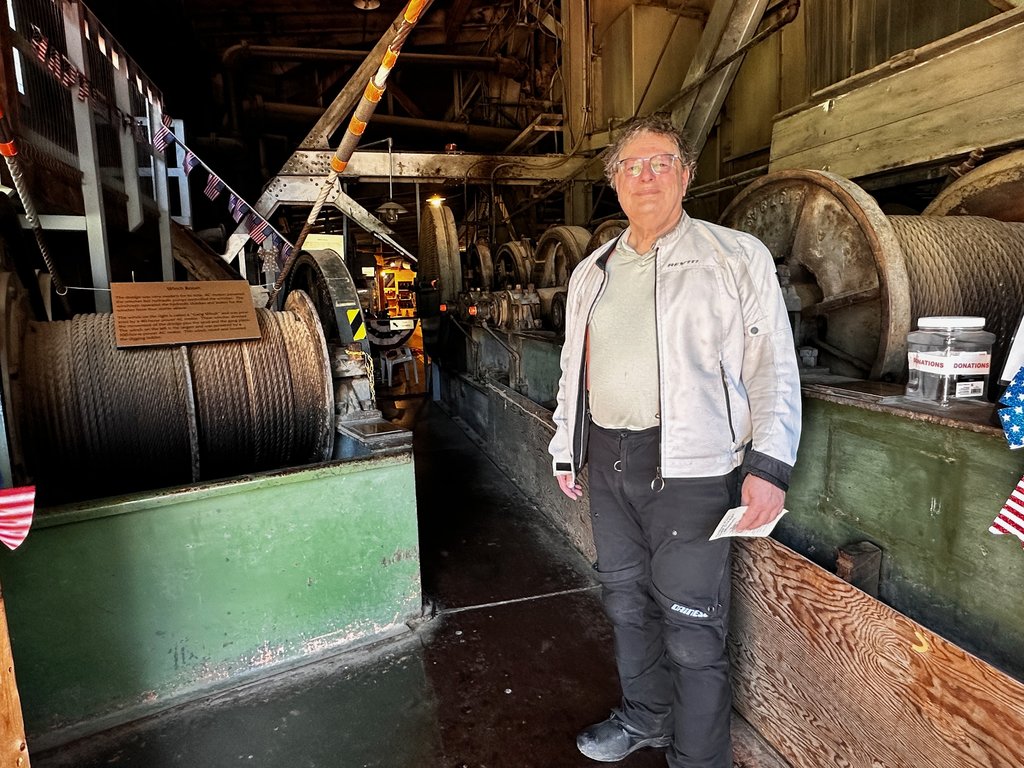
I can't say I understood it all. The three volunteers did, though. They were stationed in different sections. I'll introduce them below. Roughly, the operators diverted the river to create ponds in which the machine floated.
The arm on the right carried a rotating chain with attached buckets that fed the machine sediment and rocks. Inside the rocks were separated, and spit out the back.
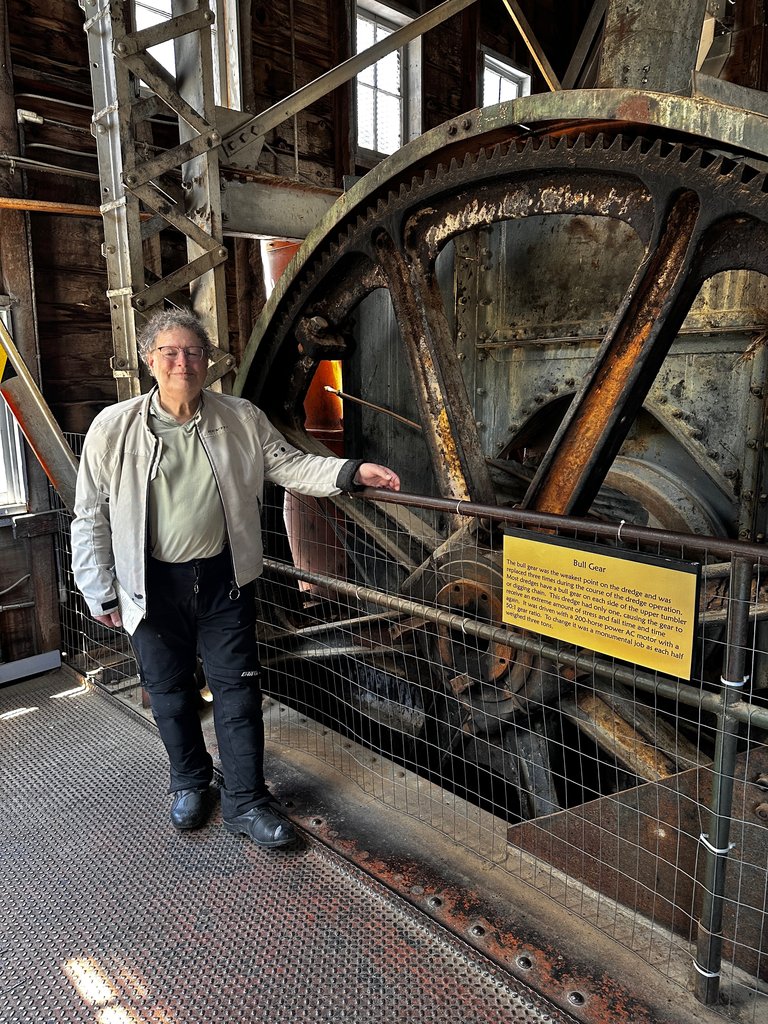
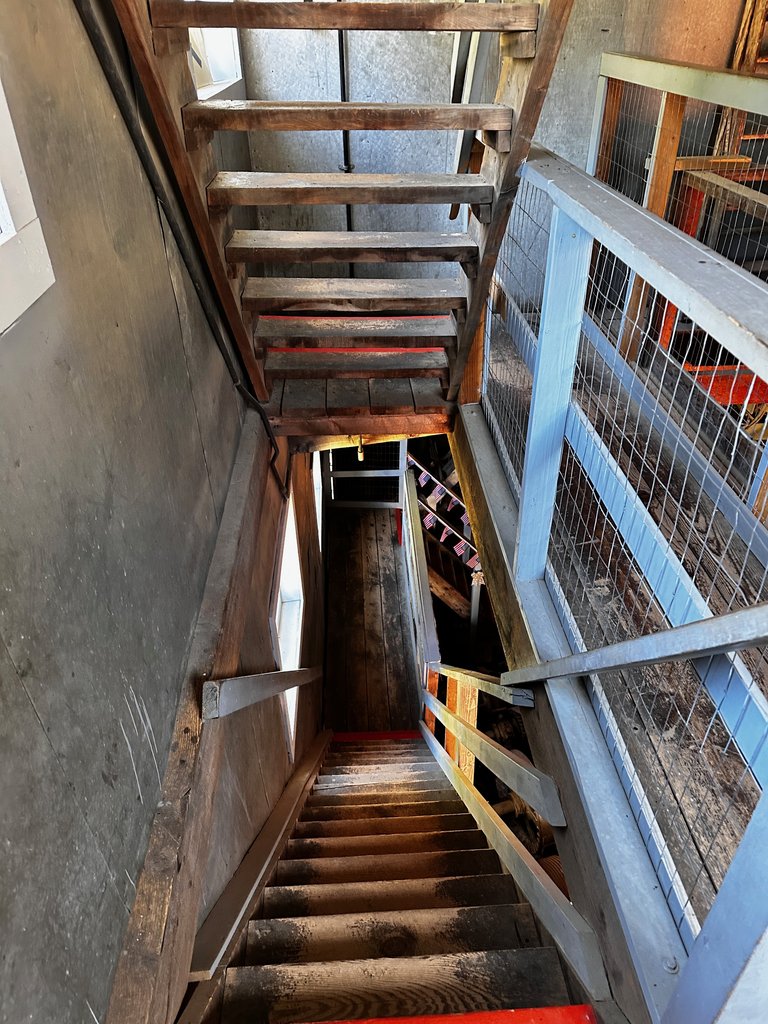
What was left was exposed to mercury coated copper, which separated the gold. Operating between 1940 and 1953 we know that the mercury was carefully disposed off, rather than being allowed to soak into the soil...
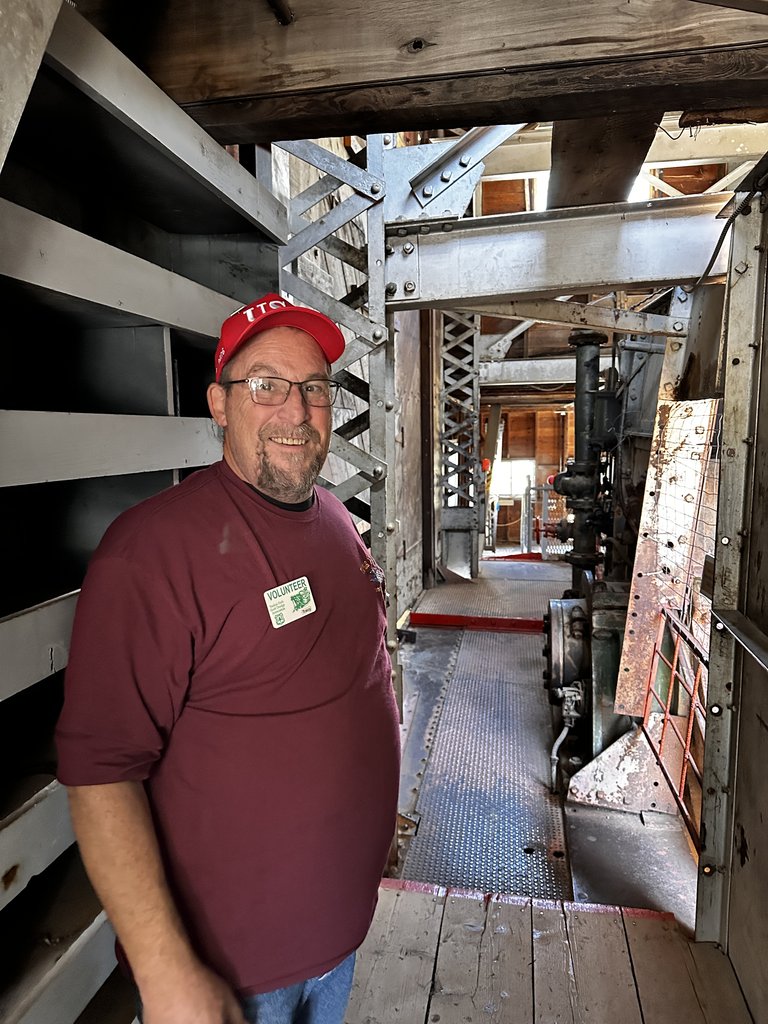
One of the volunteers is the grand daughter of the last dredge supervisors (not shown). Either she had drunk some kind of coolaid, or I am too cynical. The workers were paid. "Included in the pay" was room and board, electricity, and a school.
Which under questioning she admitted left no cash. Her 'excuse' (not that she owed one) is that it was the tail end of the Great Depression, and those workers were happy to stay alive.
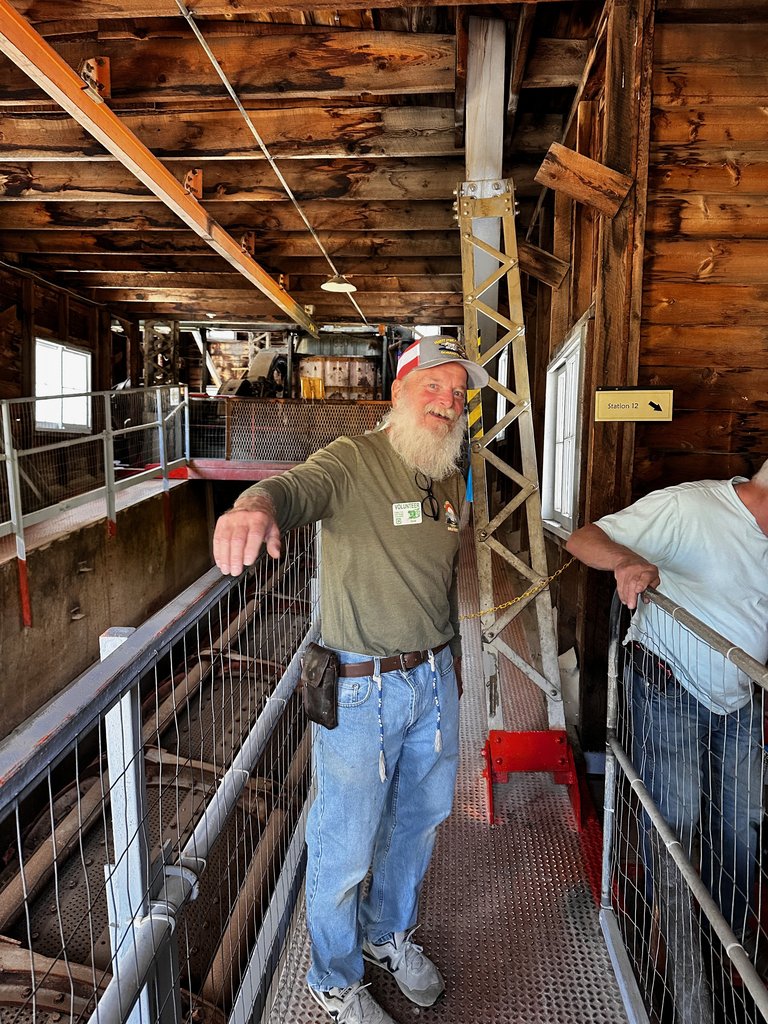
You can get a lot more detail, including the grand daughter from a YouTube Tour of the machine. Starts at about 0:38.
Tomorrow, on to Dubois, WY. I was going to stay in Jackson, but rooms are in the $500 range. From there, through Yellowstone Park to another expensivish two-day stay.